Robotic lawn mowers: how they work, how they work, and how to choose the right model.
Today, we'll look at an interesting gadget that could be useful for anyone who lives in a private home and has their own garden. Everyone knows what a traditional lawn mower is for and how it works. However, this review will focus on a robotic lawn mower, designed for completely autonomous operation with minimal human intervention. The device requires a power adapter or a specially installed charging station. The robotic lawn mower is compact and relatively quiet in operation. Models with various specifications and features are available, offering different coverage areas, runtimes, and movement patterns. So, let's look at what a robotic lawn mower is, how it's designed, how it works, and, just as importantly, how to choose the right model. Let's take a look at everything in order.
Design and operating principle
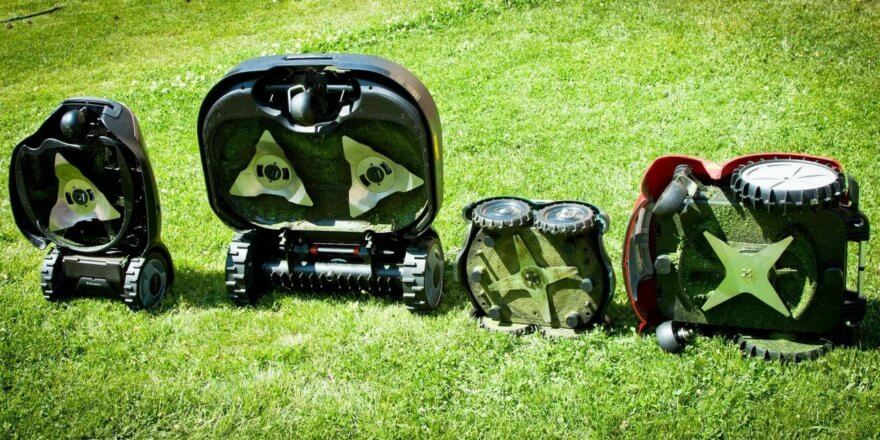
A robotic lawn mower is a small, self-propelled machine on three or four wheels, typically housed in a plastic chassis. The chassis is made of metal, with a rigid rotating disc or floating propellers installed underneath, ensuring efficient cutting. A control unit and battery are always included for autonomous operation. A grass catcher is rare on robotic lawn mowers; they typically mulch the grass and shred the stems, turning them into natural fertilizer.
Some models operate according to a preset mode, automatically leaving the charging station at a set time and returning to it, like robotic vacuum cleaners. Battery life depends on the battery type and capacity, ground surface topography, and grass moisture. A special boundary wire allows the user to delineate the desired area to be mowed.
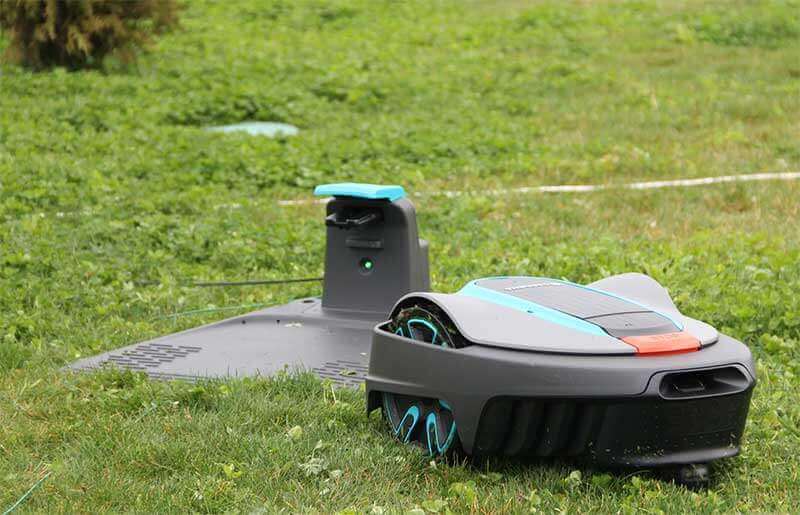
Charging on the base
All robotic lawn mowers mulch (shred the grass with rapidly rotating blades) until it dries and rots quickly, becoming an excellent natural fertilizer for a new lawn. As for the cutting tool itself, there are two types of blades: metal with sharpened edges (like a milling cutter) or free-floating.
The operating principle of the first type of knives is clear, and the cutter is excellent for mowing grass with hard stems and mixed plantings.
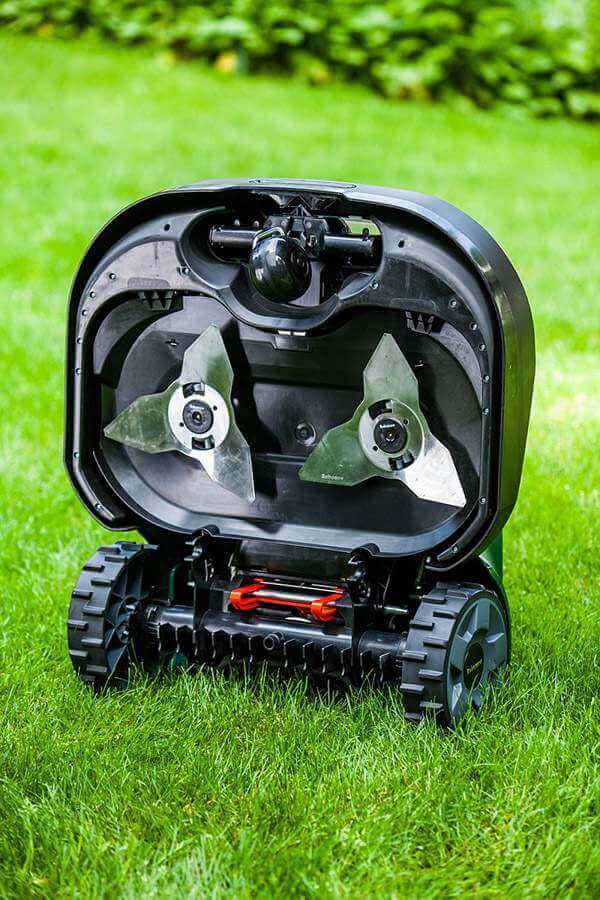
Metal knives
The second type is more suitable for traditional lawn mowing, and we'll examine it in more detail. Floating blades consist of a plastic disc with folding blades (paddles) attached around its circumference. As the plastic disc rotates, centrifugal force causes the blades to open and engage. This type of blade is less efficient than rigid blades. However, the main advantages of the floating mechanism are reduced noise levels and resistance to breakage.
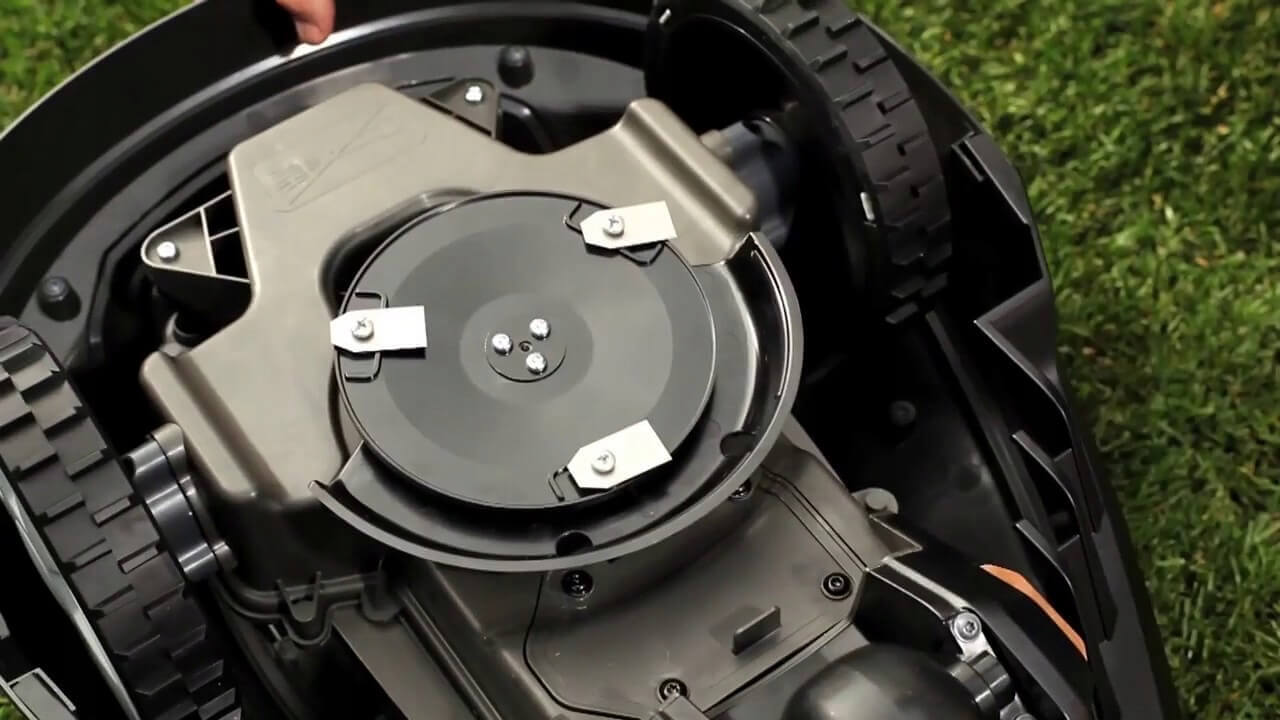
Floating knives
The blades can be positioned inside the housing in various ways. They can be centrally located or offset to the side, allowing the wheels to move along the mown area. Robots with this design can even mow grass close to walls.
Robotic lawn mowers often move erratically. However, for example, the higher-end Caiman models also feature a spiral mode, Robomow robots move in a zigzag pattern, and Bosch robots move in a serpentine pattern. However, this also has its drawbacks. Bosch lawn mowers follow a consistent path, so repeated use can leave unmown areas in the same areas. Therefore, it's possible that a random mode (or a more sophisticated one) is more appropriate in such cases. It's also important that the robotic lawn mower doesn't leave tracks near the charging station. To achieve this, it shouldn't always move in a straight line.
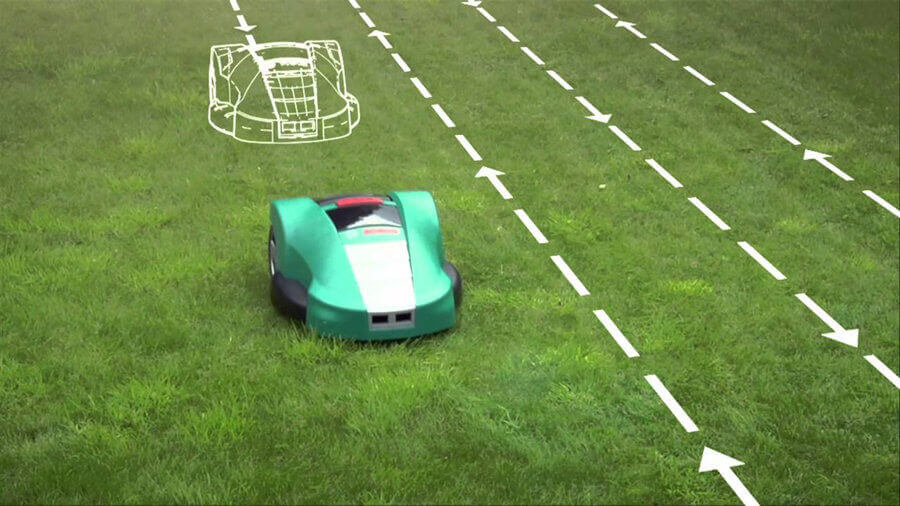
Route of movement
More advanced models are equipped with rain sensors, grass sensors, programmable start times, and other useful features. We'll discuss the different types of these gadgets in more detail below.
Types of lawn mowing robots
Robotic lawn mowers don't differ much in their operating principles. They all operate autonomously thanks to a built-in battery and a processor that controls their functions. They can also operate on a hybrid power system with solar panels. There are no automated corded or gas-powered lawn mowers (at the time of writing).
All types of automatic lawn mowers by the method of determining the working areaare divided into two types:
- premium robots equipped with grass sensors;
- models of the mid- and budget price segments that require the use of a boundary cable.
The first type offers the device a great deal of freedom of movement. For example, if the mower hits the ground or a path, it will return to the lawn. These mowers are suitable for regular grass cutting over large areas of up to 3,000-3,500 square meters.
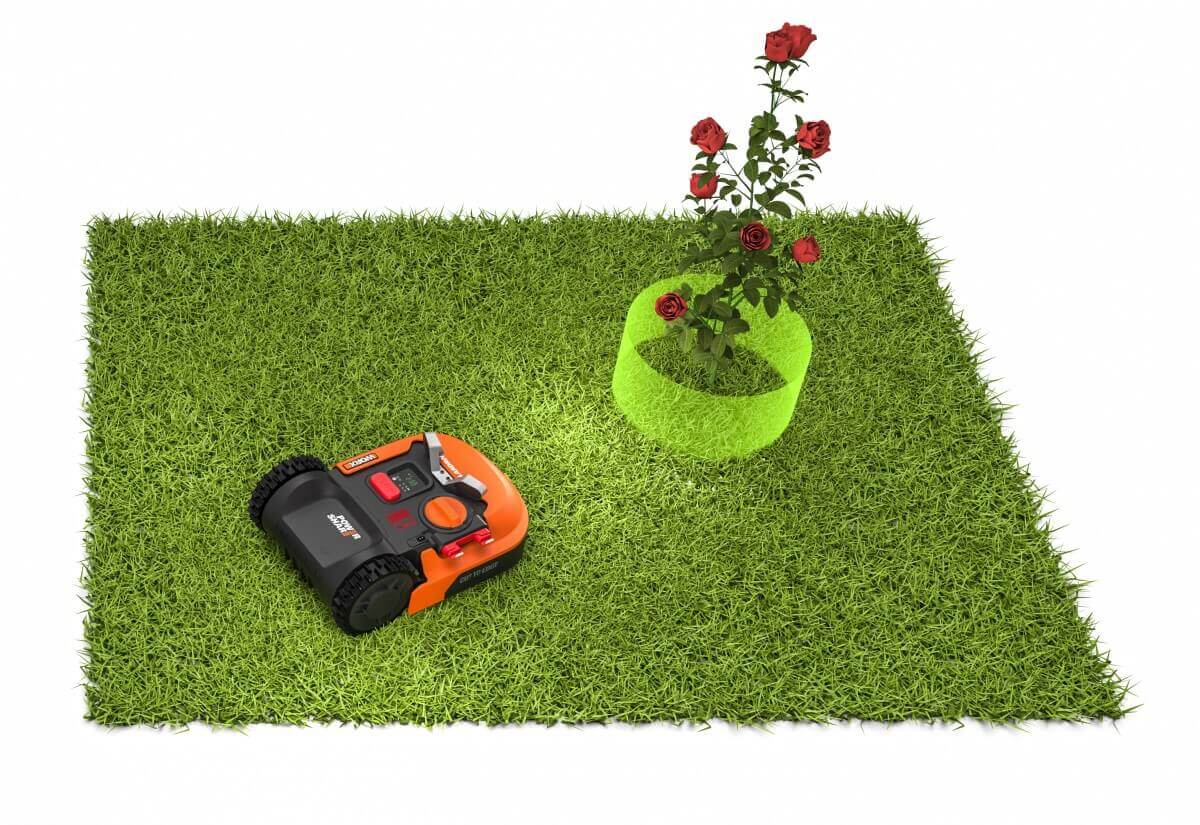
Definition of objects
In small areas, a boundary wire is quite convenient. A closed loop helps create a base. This same cable often serves as a reference point for the robotic lawn mower to follow back to the station. The cables used are green and are secured in place with special clamps that are driven into the ground. Some manufacturers recommend burying the boundary wire in the ground.
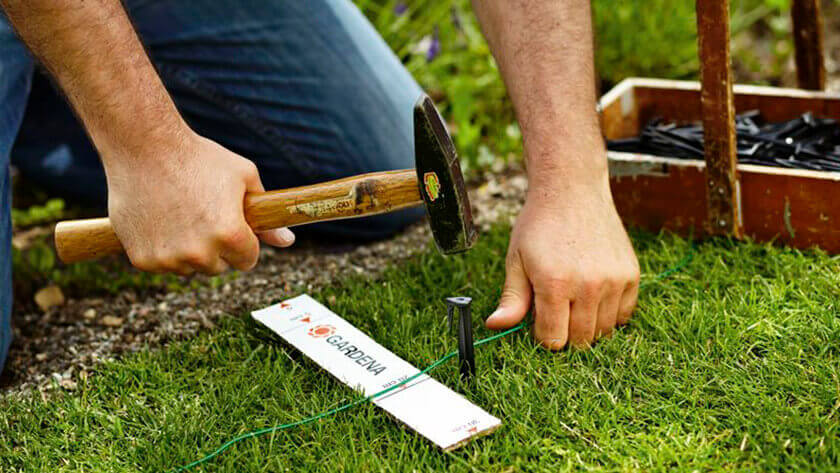
Mowing area limitation
By control method Autonomous lawn mowers are divided into the following types:
- with a built-in control unit, or requiring connection to a personal computer to configure the operating mode;
- devices with a Bluetooth module (or Wi-Fi), which support communication and are controlled from a tablet or smartphone;
- equipped with a remote control and providing several types of control.
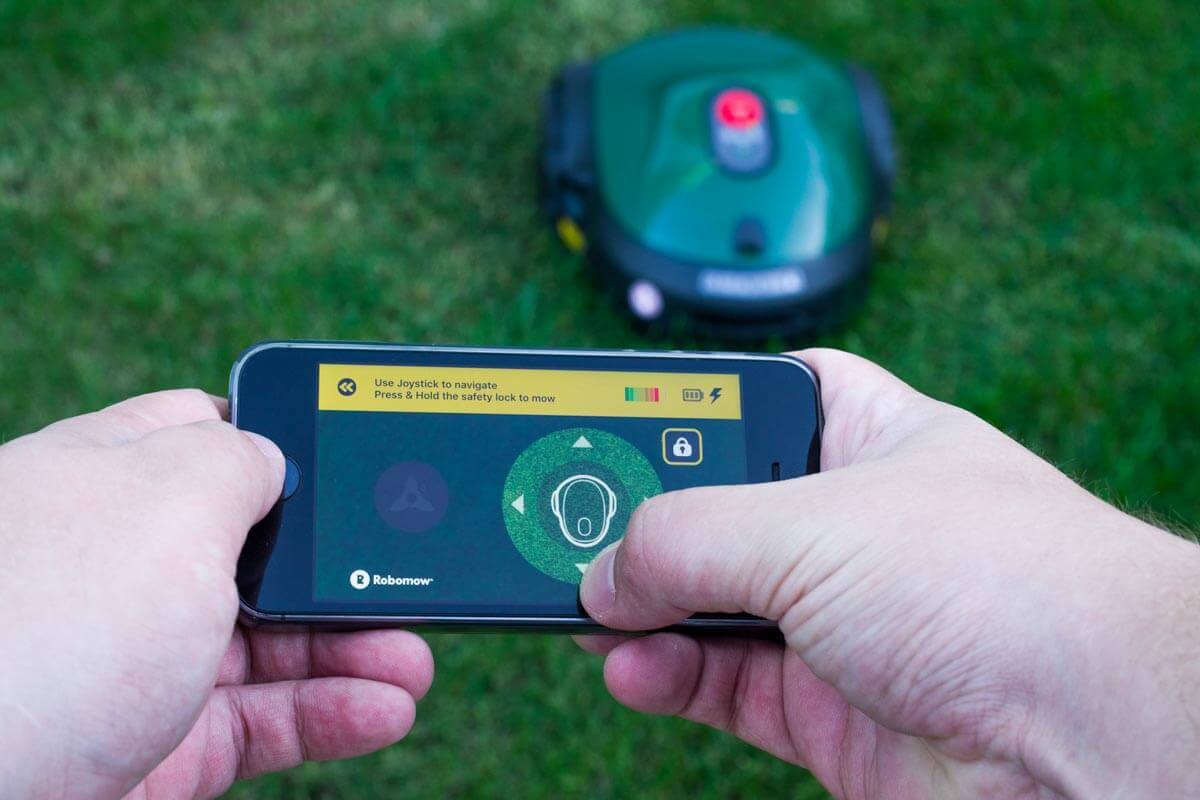
Control via smartphone
In terms of technical features, or, in other words, safety systems, robotic lawn mowers can be equipped with the following sensors and options. For example, built-in mechanical anti-collision sensors allow the robot to detect large obstacles in its path. These sensors allow the robot to change direction and avoid obstacles rather than collide with them. Premium models are often equipped with rain sensors, preventing damage in rainy weather. Therefore, if it starts raining, the robot simply returns to its base. A waterproof housing is a very useful option. This significantly simplifies cleaning the device of stuck grass and dirt.
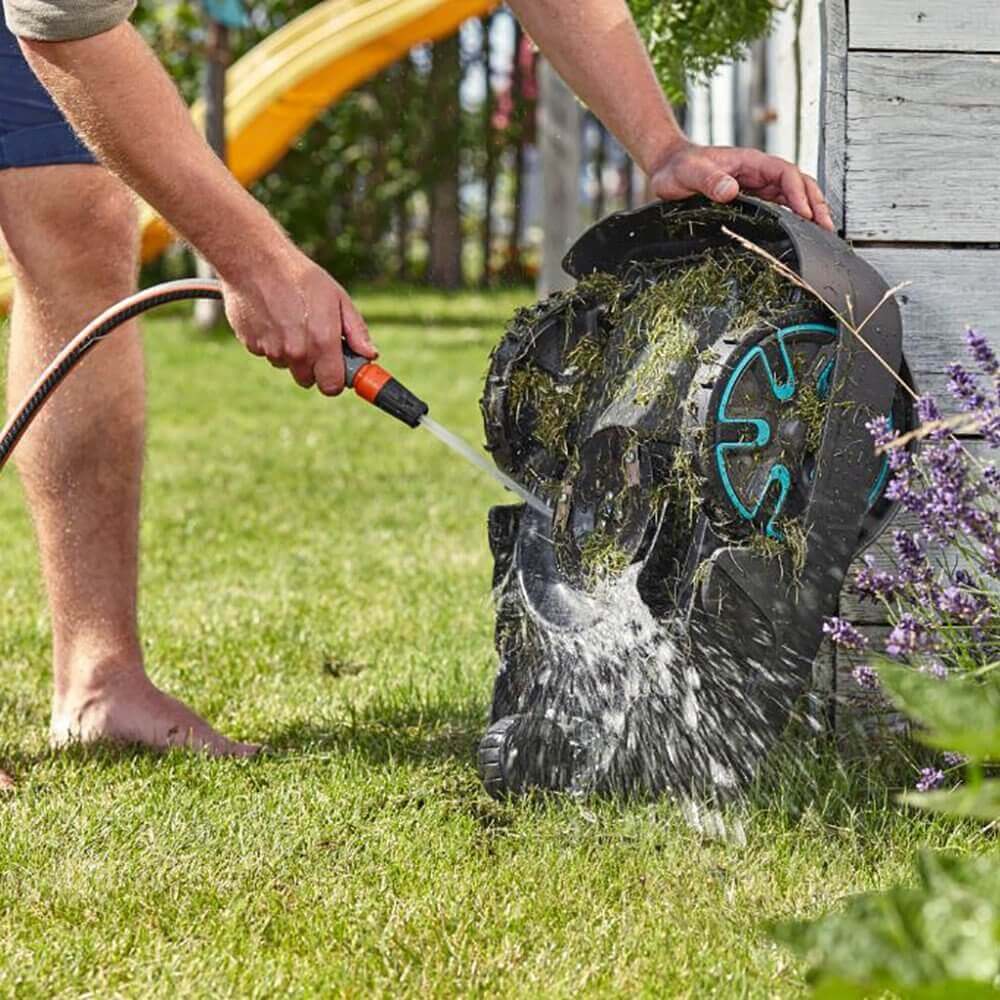
Protected case
The vast majority of lawn mowers are rear-wheel drive, and their use is widespread. All-wheel drive robotic lawn mowers are less common and should be purchased for use on areas with significant elevation changes and slopes.
In addition, useful options include:
- anti-theft protection;
- child protection;
- lawn height control (eliminates unnecessary re-driving over mown areas);
- automatic power detector;
- plotting a map of the site, etc.
How to choose a robotic lawn mower
Before choosing a robotic lawn mower that suits your needs, it's important to carefully consider a number of factors.
What to look for when choosing a robotic lawn mower:
- Control method (grass sensor or boundary wire).
- Type of cutting tool (knives).
- Cutting width. This indicates how quickly the device will mow the grass and how efficiently it will use the battery. The wider this width, the faster the cutting will be.
- The presence of sensors against collision with obstacles.
- Battery type and capacity. This parameter affects the lawn area the robot can cover. Lithium-ion batteries are the most common, but Worx also offers lead-acid batteries, and Husqvarna produces a hybrid version, the Solar Hybrid, with solar panels and a nickel-magnesium battery.
- Power consumption - the higher it is, the better and faster the robot mows the grass.
- Optimal load distribution based on the volume of grass being mown. If the lawn is tall, this creates a greater load and increases power consumption, so the mower should reduce its speed for improved results.
- A charging station is included. The base significantly simplifies the user's life when using the robotic lawn mower around the property. The robot will automatically go to and return to the station, so you won't have to search for a dead lawn mower in the grass and then carry it manually to recharge. Also, pay attention to the power supply for the charging station. It should be rated for a wide range of voltages.
- Multi-zoning is the ability to mow grass in different lawns located far from each other.
- Edge trimming feature. This option eliminates the need for additional trimming of the lawn, as the grass will be at the same ideal height after the robot's passage.
- High-quality service and a warranty (preferably at least two years). Having a service center close to your home will eliminate the risk of having to look for a repair center if something breaks down. This is quite problematic, which is easily explained by the fact that such a mower is a technically complex product, and it is unlikely to be repaired at any third-party service center.
Finally, I'd like to talk about the best brands. Some of the most popular robotic lawn mower manufacturers on the market include Robomow (also Friendly Robotics, Israel), Wiper and Caiman (Zucchetti, Italy), and Husqvarna (Sweden). You can also find models from Bosch, Stiga, Worx, and some others. The well-known company iRobot recently released its first robotic lawn mower. iRobot TerraThe cost of these devices can range from $500 to $3,000. We'll review the best models in a separate article if you're interested.
Now you know how a robotic lawn mower works, what features this type of household robot can offer, and what to look for when choosing one. If you have any questions, please ask them in the comments below!
Related materials:




The most important thing that interests me is the program that the robot uses to mow, this is precisely what is not described anywhere.
I'm looking for a robot that doesn't work randomly, but rather strictly along the perimeter and then in stripes without leaving gaps, while having a solid metal blade and a side trimmer.