How a robot vacuum cleaner works
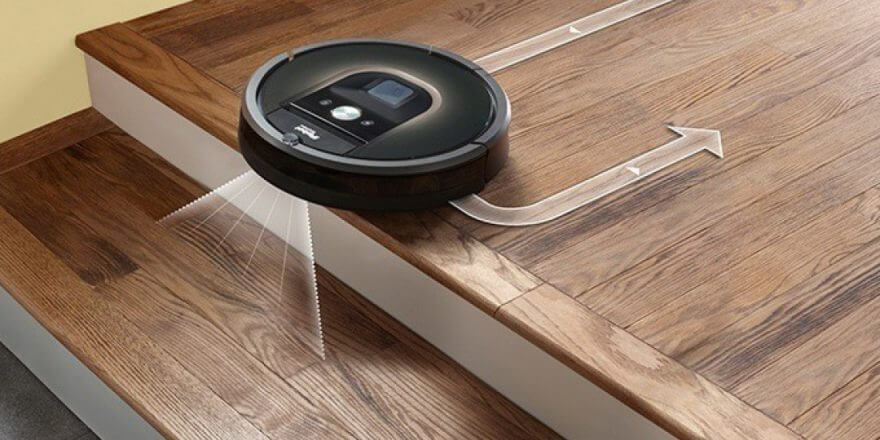
Some people find cleaning their apartment or house once a week sufficient. But others prefer more frequent cleaning. A robotic vacuum cleaner is suitable for both situations, delivering a fast and efficient cleaning experience. How does such a device work? A robotic vacuum cleaner's operating principle relies on several key components: a cleaning unit, navigation, and drive mechanisms. These essential components are present in any robotic vacuum cleaner, and their quality determines the level of cleaning performance in any room. Below, we'll take a detailed look at how a robotic vacuum cleaner works, both for wet and dry cleaning.
Robot navigation
One of the main components of the device is the navigation system. It allows the robot to easily navigate the room. The performance of this system determines whether the vacuum cleaner gets stuck or lost, as well as its operation. This navigation system can vary depending on the manufacturer and model. However, there are some basic navigation systems that are in high demand. These include:
- laser;
- internal sensors (including gyroscope);
- external sensors;
- camera.
Each navigation system has its own advantages and disadvantages, but they operate on essentially the same principle. How does a navigation system work in a robotic vacuum cleaner?
Laser navigation is considered the most advanced. Well-known models operate on this principle. Xiaomi Mi Roborock Sweep One, Neato Botvac Connected,Ecovacs Deebot Ozmo 930 and many others. The laser operates as follows: the vacuum cleaner is equipped with a special laser rangefinder (lidar), which determines the presence of certain objects in a room and the distance to them. This data is stored in the device's memory and saved as a room map. Once the map is created, the device begins cleaning each room, moving along straight, marked lines. Returning to the base follows the same principle.

We recommend checking out the best robotic vacuum cleaners with room mapping by following this link: https://robovac.washerhouse.com/en/rejtingi/robovac-5-luchshih-robotov-pylesosov-s-stroeniem-karty-pomeshheniya.html.
If the system is sensor-based, the operating principle is as follows: thanks to sensors located under the body and in the bumper, the robot vacuum cleaner detects any changes in the room and independently decides how to continue cleaning. These so-called beacons coordinate the device's movements.
For example, if the device detects a chair in its path, it will slow down and, upon contact with the furniture, begin cleaning along its path. The device can also detect the dirtiest areas on carpet or floors, allowing the robot vacuum to clean these areas more thoroughly. This all depends on the number of sensors the device has, their type, and how quickly the processor processes the signal. Each manufacturer defines the movements and actions the device will perform in a given situation.
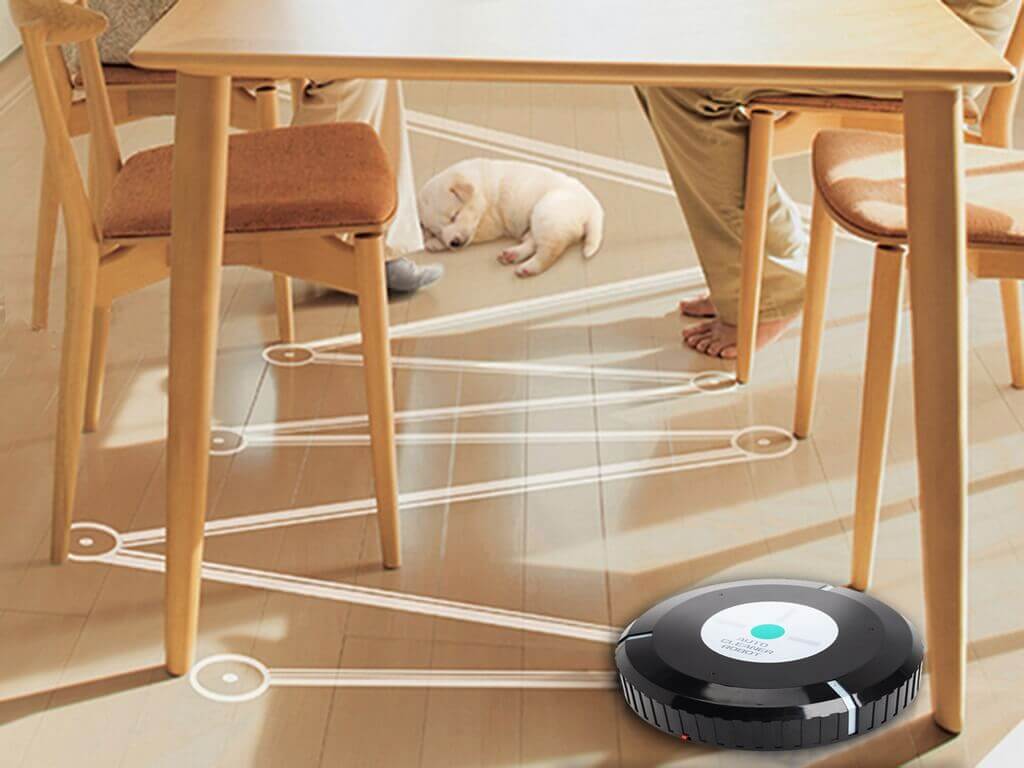
It's worth discussing separately what a gyroscope is in a robot vacuum cleaner and how it helps navigate in space.
A gyroscope is a special mechanism that responds to changes in the orientation of an object (in this case, a robotic vacuum cleaner) relative to an inertial reference frame. In simple terms, the gyroscope measures the vacuum cleaner's acceleration and angular velocity, providing information about its spatial coordinates. Even more simply, the robot remembers where it came from, where it's going, and where it needs to return (in our case, to its base after finishing cleaning).
External sensors are essentially the same navigation with sensors, but they use external devices to divide the room into specific zones. This allows for more thorough and faster cleaning. These sensors are also called virtual walls, since they limit the movement of the vacuum cleaner.
How does an external sensor work? It's a small plastic box that emits an invisible infrared signal. If a beacon is used, two additional IR beams are sent, allowing the robot vacuum to locate the beacon. The primary beacon works by moving the appliance to another room. It works by stopping the IR signal. The external sensor operates on a simpler principle than the beacon. If the robot detects the external sensor, it simply changes its direction.
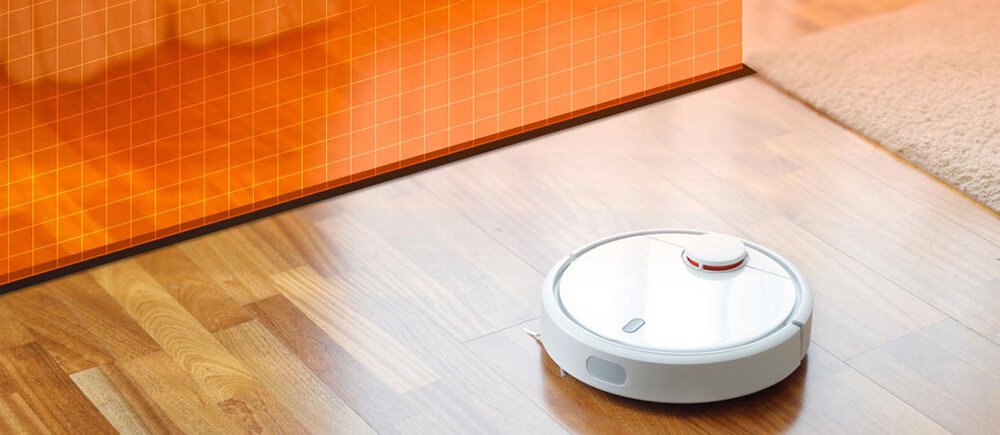
One navigation option is a magnetic strip for a robot vacuum cleaner, which creates a so-called "barrier," a virtual wall beyond which the robot cannot travel. The photo below clearly demonstrates how the magnetic strip works:
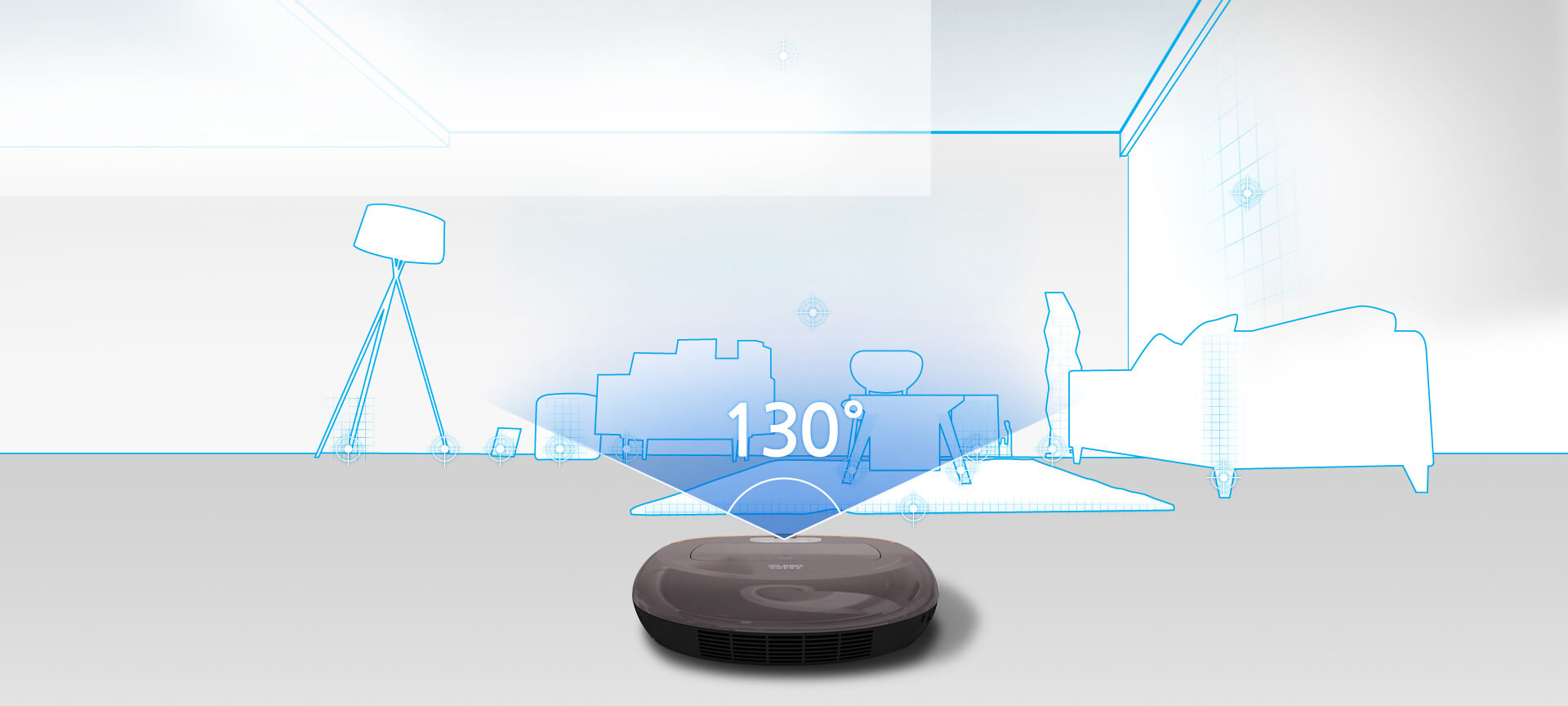
How does camera-based navigation work? In most cases, the camera is mounted on the top of the robot vacuum's body. The robot vacuum collects data from the walls and ceiling. This operating principle is used in popular robot vacuums. iClebo Omega, new iClebo O5,iLife A8, flagship iRobot Roomba i7 and others.
You can learn more about the robot vacuum cleaner's sensors in this video:
The cleaning process
Now let's look at the cleaning principle of a robot vacuum cleaner. Its primary function is to remove debris and dirt that gets in its way. The operating principle of each model is similar, and there isn't as much variety as in navigation systems. Dry vacuuming works as follows: a brush or two brushes located on the sides sweep away all dust, fur, hair, and dirt from corners, under furniture, or near baseboards, and move toward the central brush.
The main (or central) brush plays a crucial role in the machine's operation. Thanks to its bristly structure, it can collect not only dust and dirt, but also hair and fur. Many people assume that the motor, which sucks up all the dirt, is responsible for picking up various particles. However, this is a misconception. The brush sweeps all the dirt into the dust bin. It acts like a broom, and after the dirt enters the dust bin, it is compressed by the airflow inside the dust bin. The air from the motor then passes through filters located in the dust bin and out. The quality of the filter determines the cleanliness of the air blown out.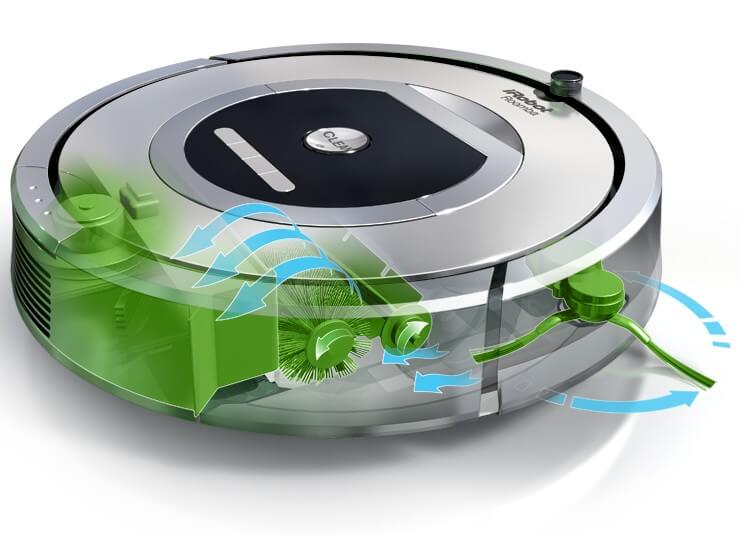
However, there are some nuances in the design and configuration of the device, depending on the manufacturer. These nuances include:
- The main brushes, their number and types. As a rule, there is one, but sometimes there are two, as in iRobot robotic vacuum cleanersThe operating principle is as follows: when the brushes rotate toward each other, the bristle brush collects pet hair and various dirt, while the rubber brush collects larger debris (sand or crumbs). Some models have only one rubber or bristle brush.
- Side brushes and their number. For faster cleaning, some models have an additional side brush, mounted to the left of the appliance. It's commonly believed that two brushes are less effective than one, as they tend to scatter debris toward each other. We believe that two side brushes perform better.
- Filters and their types. Robot vacuum cleaners can have both simple cloth filters and multi-layer HEPA filters. The latter are preferred by people with dust allergies.
- Container and motor power. Container volumes range from 0.25 to 1 liter, and motor power ranges from 15 to 65 watts.
It's worth noting that a robot vacuum cleaner's performance will be enhanced by its main brush and suction power. Therefore, when purchasing, you should primarily pay attention to these two factors. At the same time, if you need robotic vacuum cleaner for cleaning pet hair For cleaning carpets or carpets, a vacuum cleaner should have a central brush. For cleaning smooth floors, a vacuum cleaner with no turbo brush is better.
The operating diagram of the robotic vacuum cleaner is clearly shown in the video review:
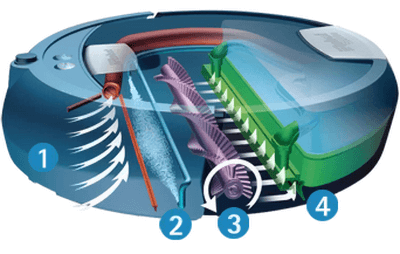
When it comes to wet cleaning, the operating principle is that the cleaning robot first collects all dust and debris from the floor (1), after which liquid is sprayed from a special water tank (2) and the floor covering is scrubbed with a brush (3). The final stage of the cleaning robot vacuum cleaner is the removal of dirty water from the floor with a scraper and suction into the tank (4). washing robot vacuum cleaner It is not practical and not recommended by manufacturers for cleaning carpets, laminate and parquet.
For more information on how the cleaning robot works, watch the video:
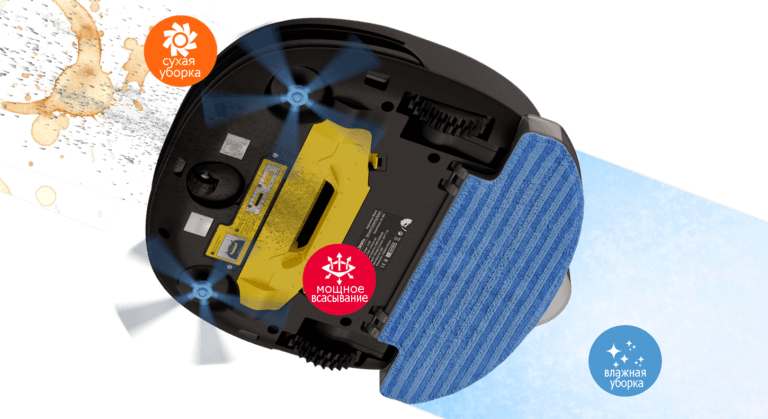
There is also a combined one robot vacuum cleaner with dry and wet cleaningThe device works by cleaning smooth surfaces with a microfiber cloth (attached to the bottom of the unit), while carpets are cleaned with either the main brushes or the turbo brush.
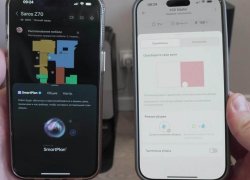
In this case, dry cleaning is performed first (the robot covers the entire accessible surface). Then, you install the wet cleaning unit with a cloth, dampen it (or fill the tank with water), and start the robot. During wet cleaning, you should limit the robot's access to carpets and wood floors to avoid damaging them. To do this, install a virtual wall, beacons, or magnetic tape in the desired locations. Newer models allow you to limit the cleaning area on a map directly in the app.
Return to base
Robot vacuums are battery-powered. In the cheapest models, if the battery runs low, it simply turns off and must be manually charged. To prevent this, most models begin searching for a charging base when the battery reaches a certain level. The search works as follows: a sensor located on the front bumper detects an infrared beam emitted by the base. Once detected, the robot vacuum begins moving toward the base and docking.
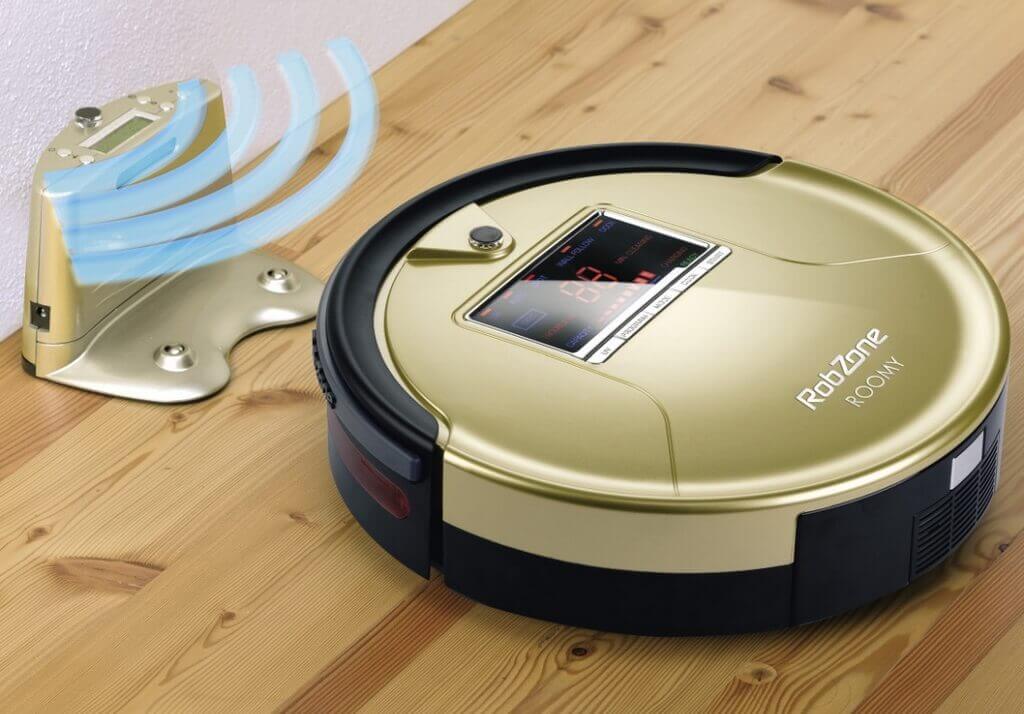
It's worth noting that robots that navigate using lasers or cameras store the location of their home base in their memory. Therefore, once cleaning is complete, the home base is found using the map stored in their memory.
This is why you shouldn't manually move a switched-off robot from its base to the desired room, as the vacuum cleaner will likely not return to its base after cleaning (since it doesn't remember how it left it).
So, we've covered how a robot vacuum cleaner works, with wet, dry, and combined cleaning modes. As you can see, the device's functionality is already quite advanced; it can remove debris autonomously, efficiently, and relatively quickly!

Thank you for writing so clearly and thoroughly. We've been eyeing the Genio Deluxe 370 for a while now, but we couldn't bring ourselves to buy it. It seemed unrealistic what the manufacturer was saying about its features. Now it's clear there's no mystery, just a very complex program. We'll probably buy it now.