Why do NEW robot vacuums lose power, and is this always a bad thing? Personal experience and examples

Hello to all readers of the project! In this review, I'll explore a very important and, no doubt, interesting topic for many. Specifically, where does robot vacuum cleaner power go, and why the claimed thousands, or even tens of thousands, of Pascals don't always correspond to the robots' actual suction power. So, let's get started!
How does a vacuum cleaner vacuum and how is power measured?
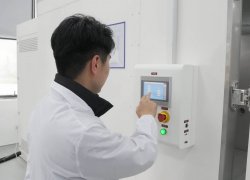
First, I'll tell you what methods of measuring power I know. For example, in Dreame test labAt the shop I visited last year, suction power is measured using a pocket differential pressure gauge. The device's tube is inserted into the vents where the robot's main turbine is located, and the differential pressure is measured. This value is then displayed in promotional materials, referred to as suction power or suction force.
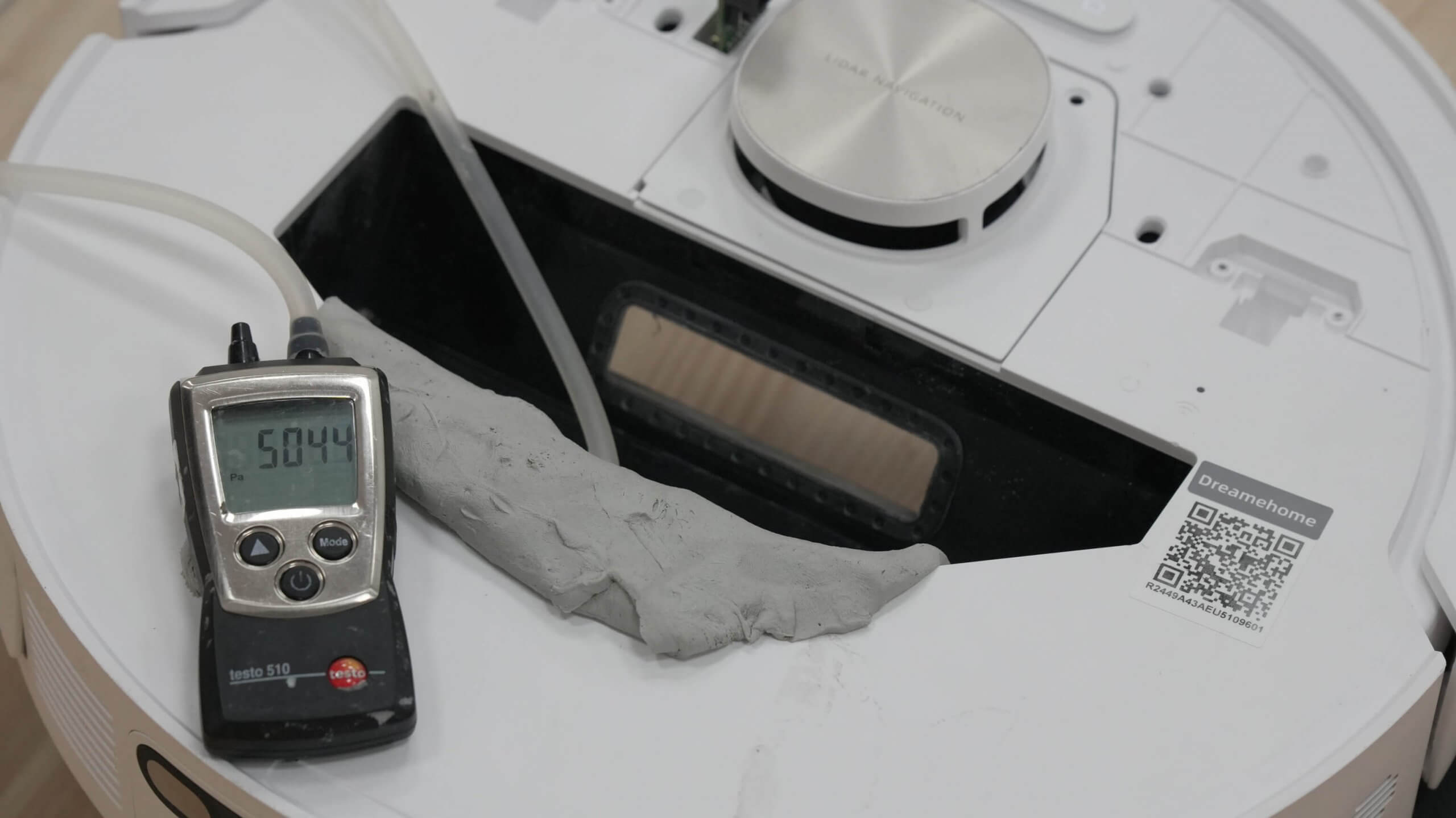
Suction force test with differential pressure gauge
And here it's important to digress a bit and discuss in more detail the physical phenomenon of differential pressure. It's the basis for the operation of any vacuum cleaner. When the motor drives the turbine, it forces air out of the inner chamber, creating a vacuum—the pressure inside becomes lower than atmospheric pressure. As a result, the ambient (atmospheric) pressure literally forces air into the vacuum cleaner body through the suction nozzle. Along with this airflow, particles of dust, lint, hair, and other small debris are captured. Of course, not without the help of the vacuum cleaner's brushes.
Now let's return to the test lab method. In my opinion, it's not entirely correct, since the pressure generated by the turbine, or the airflow from the turbine to the robot's suction hood, passes at least through a ventilation duct, the dust collector, the filtration system, and the turbo brush. This means that there are certain obstacles along the airflow path that create aerodynamic losses in vacuum cleaners.
That's why many testers use alternative methods for measuring robot suction power. A more accurate method, in my opinion, is to measure the vacuum at the robot's entrance, specifically before the turbo brush, in the area where it contacts the surface. This is the area where the vacuum will actually be cleaning the floor. This provides a more accurate reading and often differs from the Pascals stated by the manufacturer. Other methods also include airflow, air volume, and other related parameters.
But personally, I'm most confident in the so-called crevice test. It involves pouring loose debris into crevices of varying depths, and the robot vacuum cleaner, passing through these crevices of varying depths, demonstrates its true ability to suck up dust and debris.
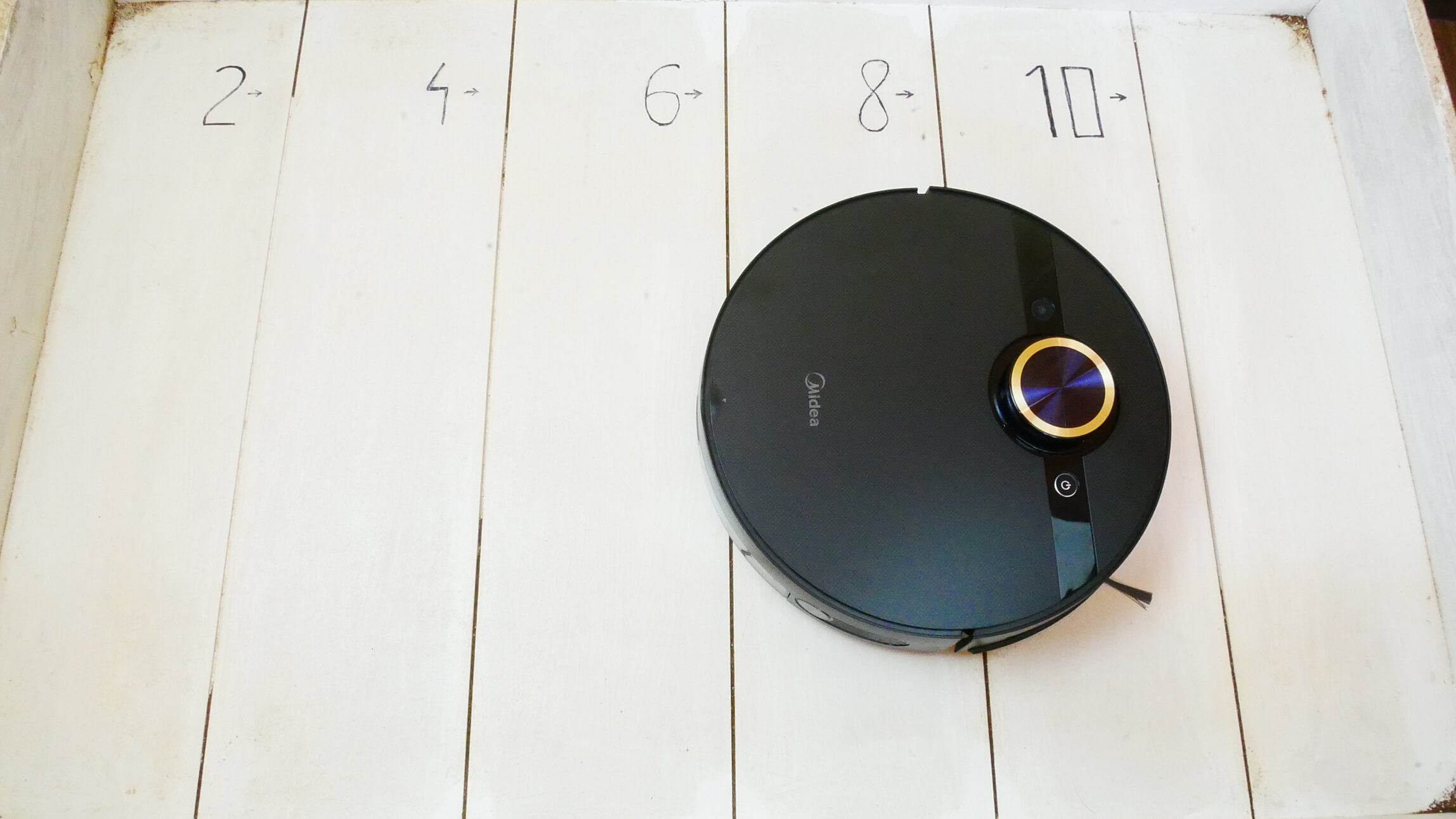
Power testing on a slot stand
This means we get the real vacuum cleaner power we need in everyday life. After all, you'll agree that if a robot claims to have 150,000 Pascals and can't vacuum up sand or dust from between floor tiles, it's not really that powerful.
First observations of power loss
Now to my observations. There were four key ones.
The first one is when I was conducting 2021 robot vacuum cleaner comparison testThere was a test comparing the amount of sand collected on tiles. And imagine my surprise when, in my opinion, the powerful Dreame Z10 Pro robot vacuum cleaner, with its claimed 4000 Pascals, performed worse at collecting sand than all the other robots, which claimed 2500-3000 Pascals. In fact, the robot didn't vacuum sand out of crevices, unlike the others.
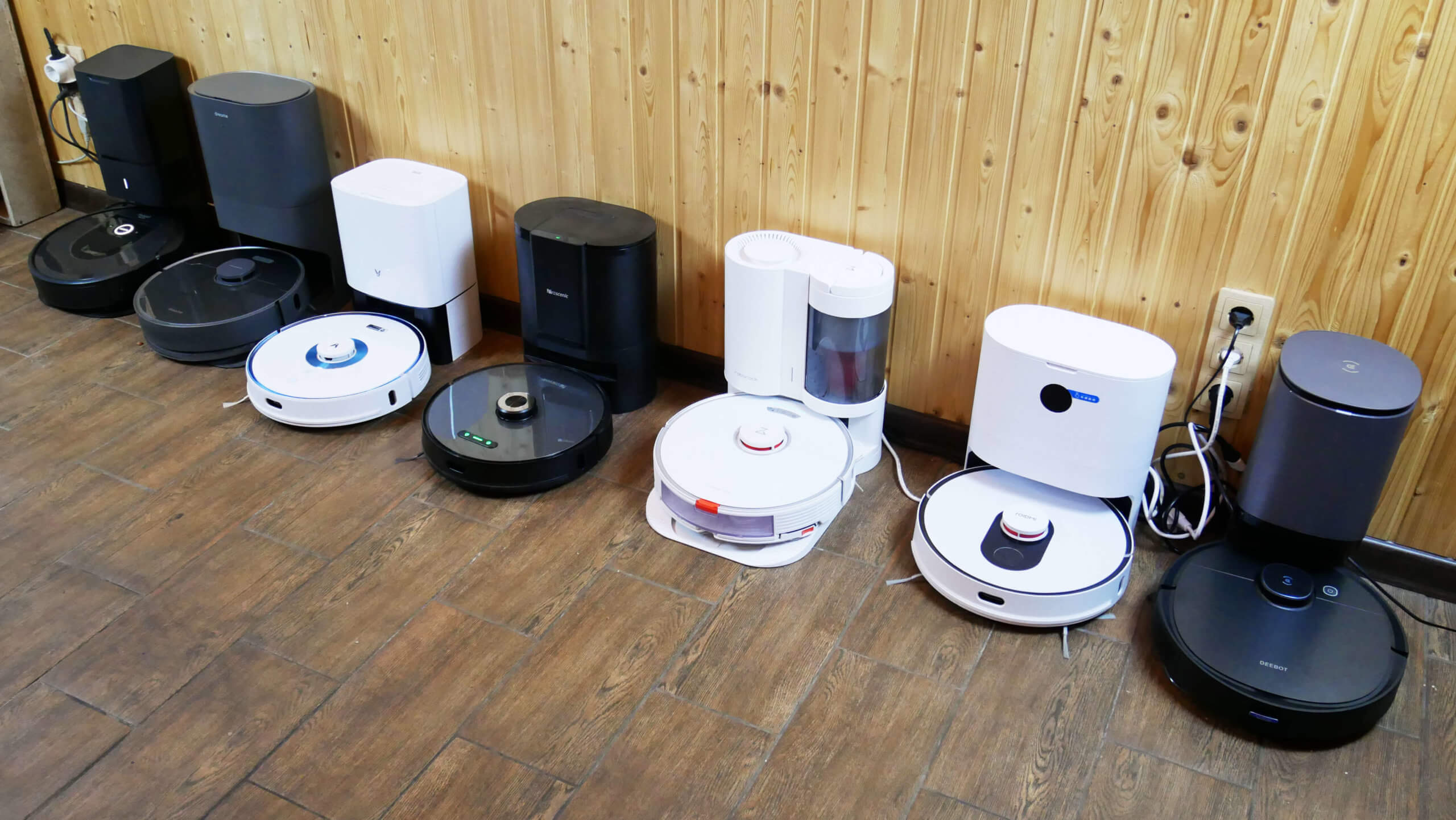
Comparative test of robot vacuum cleaners
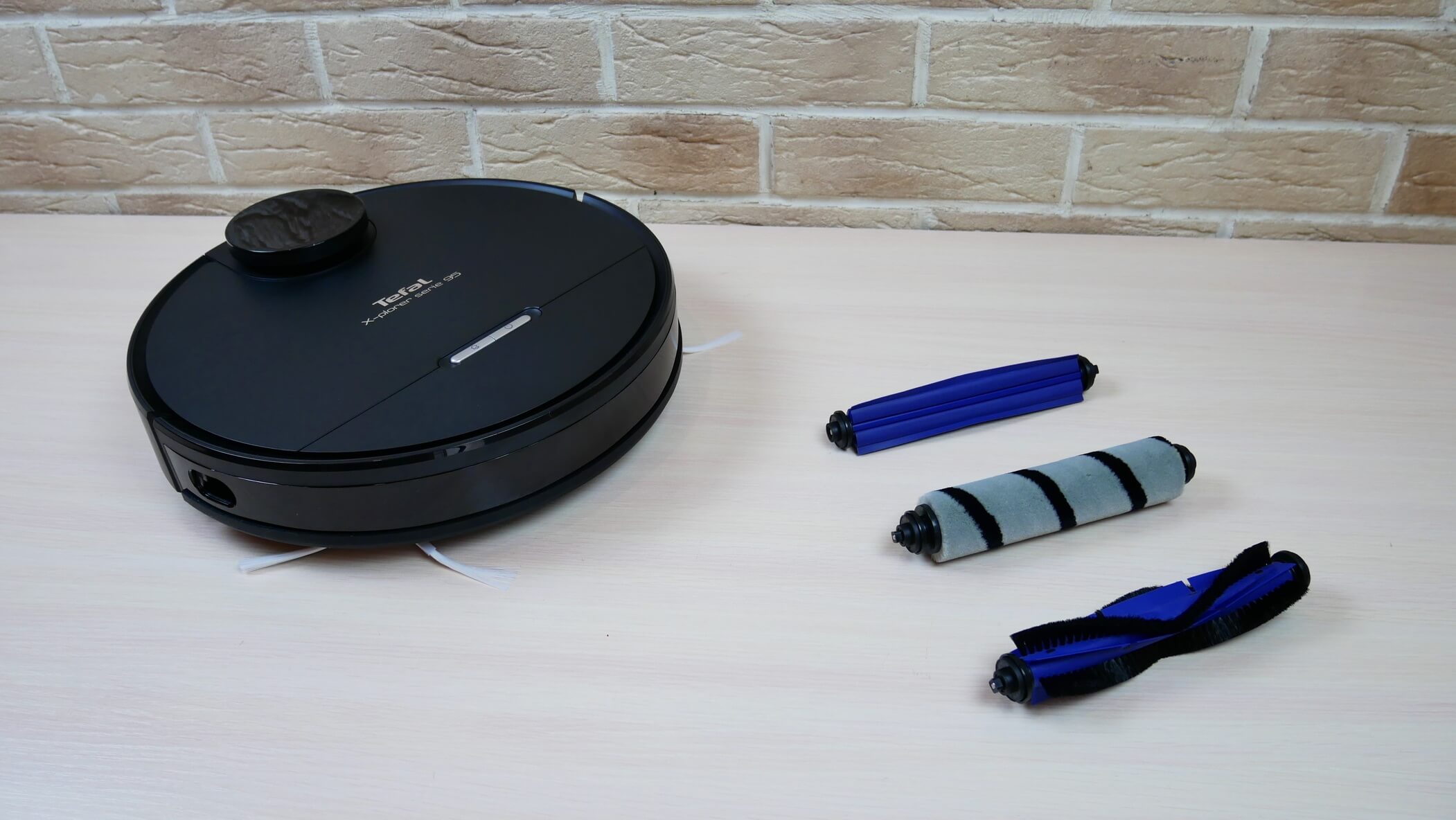
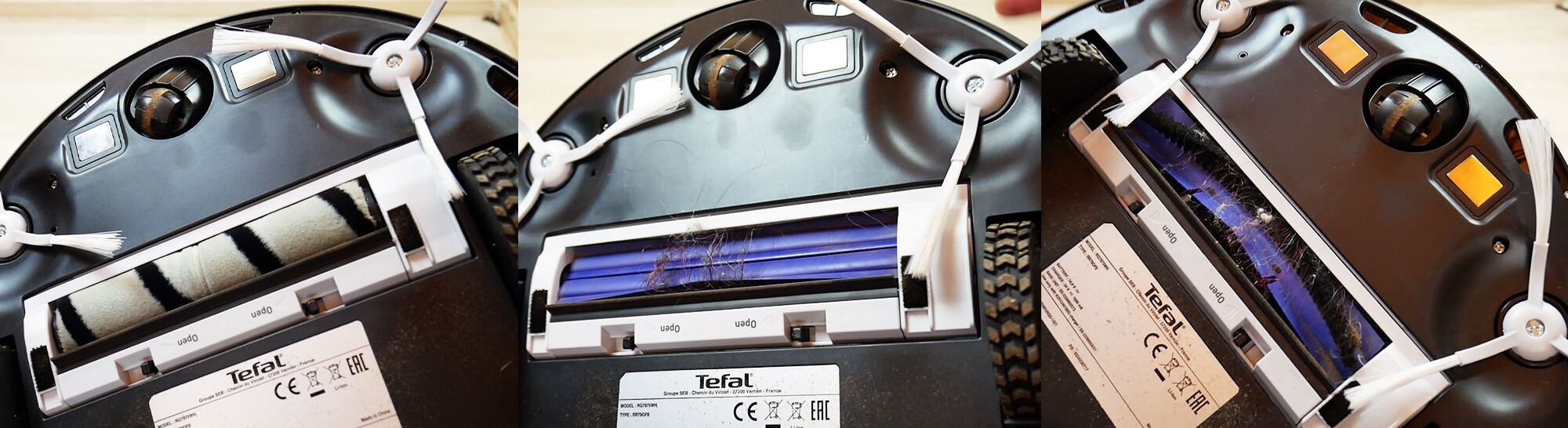
The second observation is even more interesting. It surfaced during a review of the Tefal X-plorer Series 95 robot vacuum cleaner. This robot claims a whopping 12,000 Pa, which, as far as I know, was a record-breaking figure on the market at the time of its release in 2021. But another interesting detail is that it comes with three turbo brushes, each with a different design.
Tefal X-plorer Serie 95
With each of them, the robot showed completely different results on the slit test bench:
- With the bristle-petal brush installed, the robot was able to suck out debris from crevices 2 and 4 mm deep.
- He showed a similar result with a silicone brush.
- But with a fluffy roller, the robot vacuum cleaner managed to collect debris even from a 10 mm gap.
I'll tell you how this happened later, but now about the third observation. And it again concerns Dreame Z10 ProThe thing is that this robot vacuum cleaner is visually very similar to its brother Dreame L10 ProHowever, the Z10 Pro only partially cleared 4 mm of debris in the crevice test, while the L10 Pro managed to partially clear debris even from a 10 mm crevice.
You might ask, "How so?" And I'll tell you: the Z10 Pro has more power loss than the L10 Pro. Even though both claim 4000 Pa, and the shape of the brushes and the robots themselves are exactly the same.
And the fourth observation is the most recent, and it applies to almost all new robot vacuum cleaners, starting around 2024. The flagship of that time is coming out. Roborock S8 MaxV Ultra with 10,000 Pascals and turns out to be much weaker than the 2022 flagship Roborock S7 MaxV With a claimed 5100 Pascals. A new market leader is coming out in 2025. Dreame X50 Ultra Complete, which is indicated as 20,000 Pa and turns out to be weaker than the previous flagship from 2024 Dreame X40 Ultra Complete, which were declared to have 12,000 Pascals. It turns out Ecovacs Deebot X2 PRO with 8300 Pascals and, as expected, shows less real suction power than Ecovacs Deebot X1 Omni, which had only 5000 Pascals.
Do you see the power? I don't see it either, but it's there!
And now we move on to the main topic of the question: “So where does the suction power of robotic vacuum cleaners go or get lost?”
Where does the high declared power go?
My first suspicion is that engineers at various companies have decided to prioritize other key characteristics of robotic vacuum cleaners, namely the ability to pick up large debris from the floor and remove tangled hair and fur from the brushes. Here's a clear example.
I recommend watching the video version of this review to get a better understanding of the details:
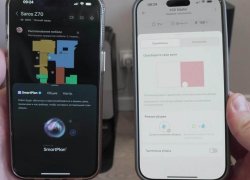
There are three new robot vacuum cleaners: Roborock Saros 10R, which showed a result of 8 mm on the stand, partially with the declared 20,000 Pascals, the Dreame X50 Ultra Complete, which showed the same result with the same Pascals, and Roborock Saros Z70 which was able to partially clear 10 mm with a claimed 22,000 Pascals.
Anyone who watched these reviews on the channel probably noticed that, despite its super-powerful design, the Roborock Saros Z70 encountered several errors during testing due to the turbo brush getting blocked. This reminds me of the Tefal I mentioned in my observations. The problem is that the engineers created a narrow gap between the brush and the robot body. Yes, it's more powerful, and the Tefal's thick bristle brush has a better power rating. But with this design, the brush would get blocked by any large debris, such as litter granules or dry food.
I'll simulate the problem using the three robots I'm comparing. Let's take a felt-tip pen cap. In my home, this is a frequent guest on the floor, as I have a child at home. It instantly blocks the Roborock Saros Z70's brush. The Saros 10R doesn't have this problem, as there's a gap between the half-brushes for hair removal, meaning it can swallow larger debris from the floor. The Dreame X50 Ultra Complete also has no problems with the cap, as it has a huge gap between the brushes.
Let's take something larger. For example, a pebble, but it could be a LEGO piece or any other larger debris. The Saros Z70 can't catch it, nor can the 10R with its wider clearance, but the Dreame X50's brushes can even catch this stone, just like they can larger rocks.
In the end My first conclusion is that the suction power of robotic vacuum cleaners is lost due to the increased clearance between the brushes and the body.But this allows the robots to brush away hair and fur, pick up larger debris, and, most importantly, avoid getting blocked by debris. To me, this is a compelling argument for a minor power loss, if it truly isn't significant.
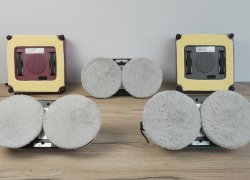
Different central brushes on one robot
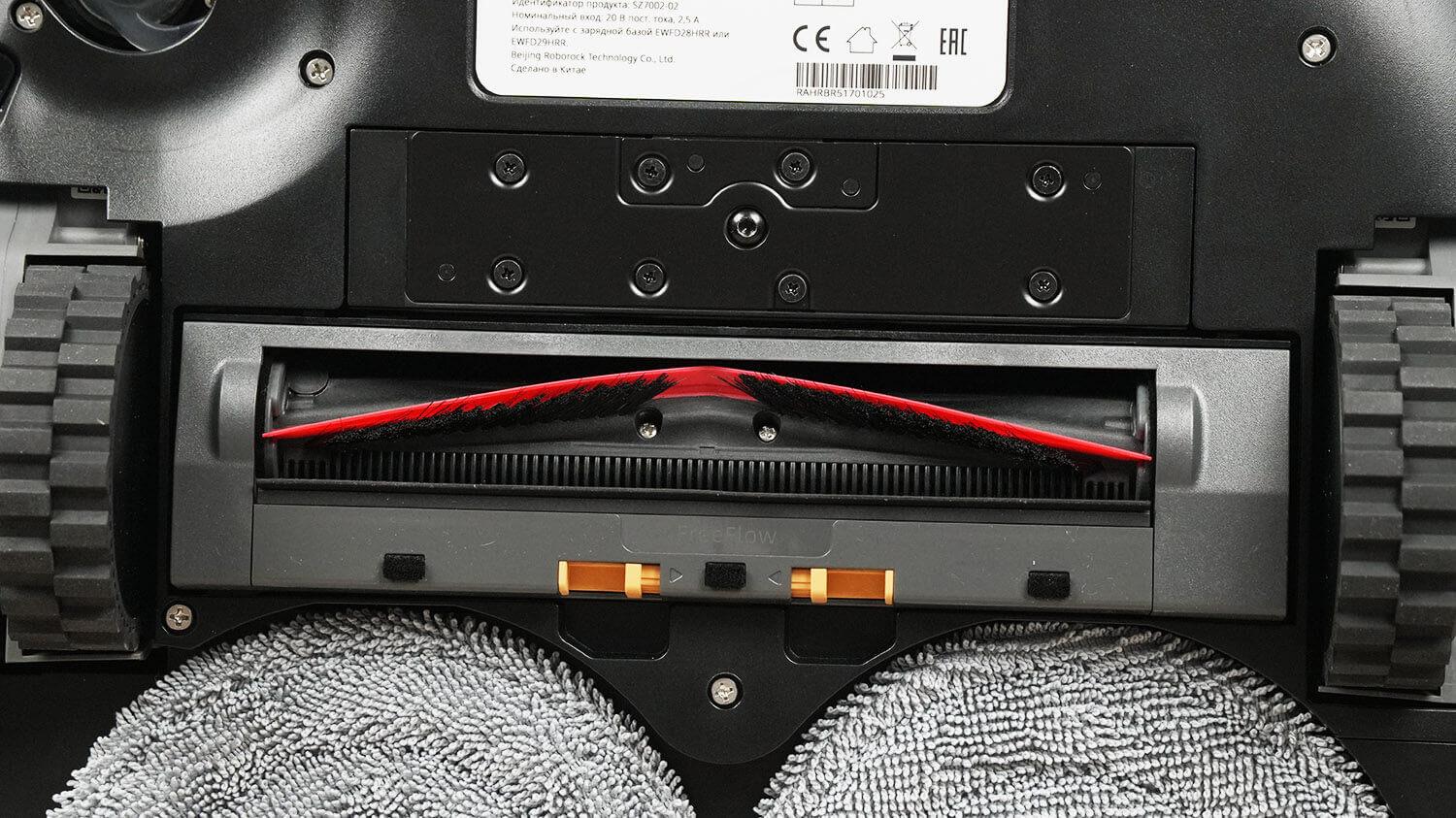
The second reason for power loss is a non-floating or stationary central brush block.Most robots, especially modern ones, and especially those in the mid-price range and above, are equipped with a movable turbo brush unit. This allows the brush to adhere better to the floor, resulting in higher vacuum pressure near the floor surface.
Central brush block
Sometimes engineers come up with a half-solution, where the central brush unit itself doesn't float, but only the scraper moves. This approach fails to prevent power loss. For example, the new 3i P10 Ultra With a claimed 18,000 Pascals, it only achieved a 2 mm result on the crevice test bench. And in my opinion, this is precisely due to the fixed central brush block. The same problem and such low test bench results have been observed with other robots with fixed turbo brush blocks, for example, Xiaomi Mijia M30 Pro c 7000 Pascals. In general, a fixed central brush block is always a bad thing, with very rare exceptions.
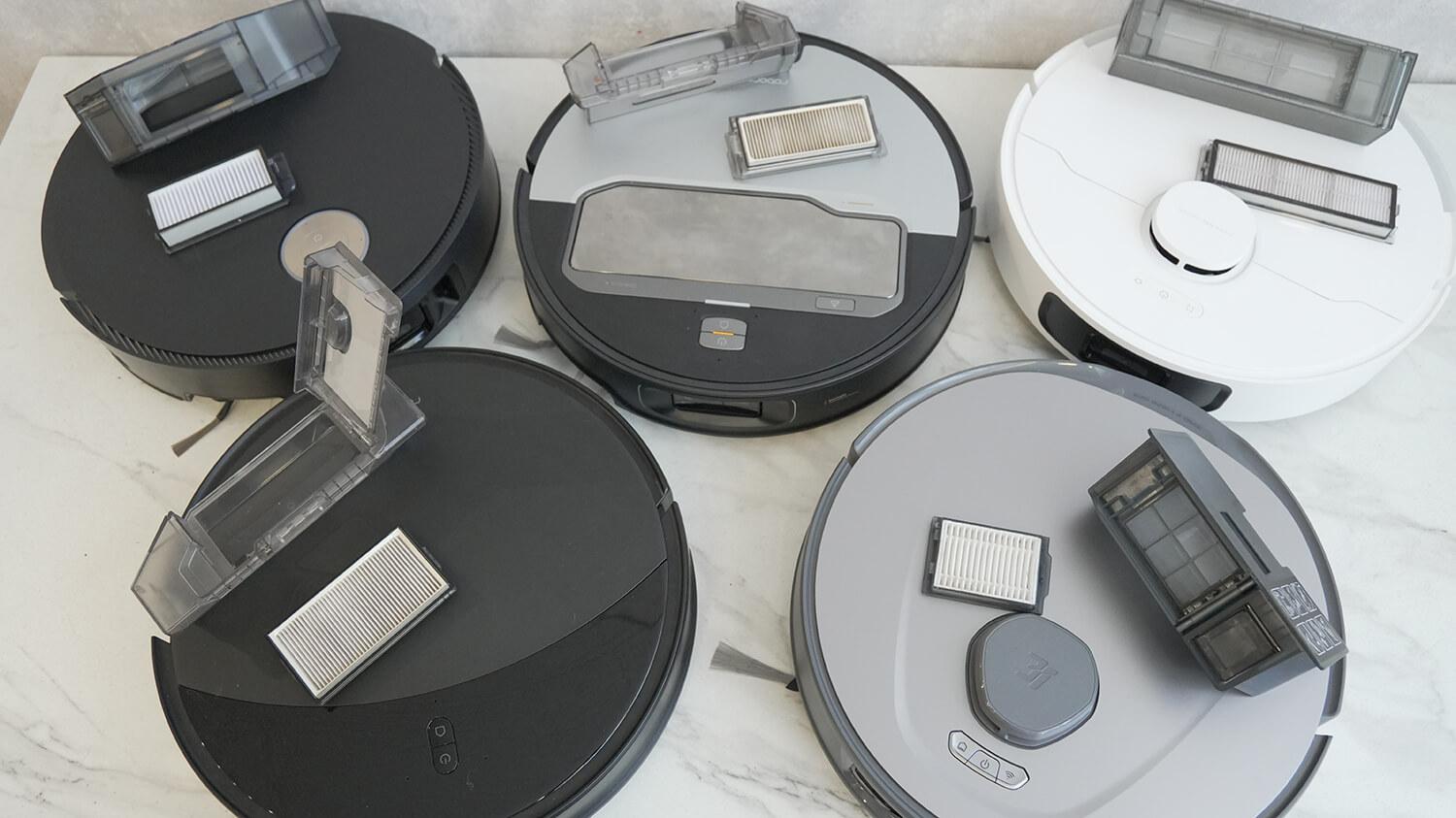
The third reason for power loss is aerodynamic losses due to location, size and thickness. HEPA filter, as well as other components associated with the suction and filtration system.
Look, all robots have different ones, even within the same brand:
The difference between robot vacuum cleaner dust bags and HEPA filters
Sometimes they'll put the HEPA filter on the end, sometimes they'll move it upward, sometimes they'll make it bigger, sometimes smaller, sometimes thicker, sometimes thinner. Sometimes they'll install a mesh screen in front of the HEPA filter, sometimes they'll remove it. We could argue for a long time about which design solution is the most effective and optimal, but I haven't found a clear correlation.
It seems that the smaller the HEPA filter, the higher the power when the dust container is empty. But then the filter clogs faster, and the motor begins to choke, losing suction. Many experts believe that a top-mounted HEPA filter ensures a straight, clean flow with minimal aerodynamic losses. However, I can also point to many robots with a top-mounted HEPA filter, which lacks power and clogs the filter quickly.
The dust collectors themselves vary greatly in size among robots, and some have self-cleaning hatches that often become clogged with debris and depressurize the dust collector, causing a loss of suction power.
A clear example from observation is the test results of the visually very similar Dreame Z10 and L10 Pro. Despite the same body design, they have different dust collectors and HEPA filters. One robot is self-cleaning and therefore has windows in the dust collector, while the other is not. The self-cleaning one turned out to be weaker. In general, the design of the suction and filtration system is the most unpredictable cause of power loss, and it is impossible to accurately predict the actual suction power; only individual tests of each model will reveal this.
Well then The fourth reason, of course, is pure marketing.Not all brands play fair. This is most often the case with no-name brands and budget OEM products. I've seen dozens of product listings for familiar budget robots, disguised as 2500-3000 Pascals, just under other brands' stickers and in a different color. And then there's the claimed suction power, at least twice as high, with an identical design. And that's just the beginning. Marketers can have much bigger appetites. I recommend either studying real-world tests or, ideally, avoiding such robots.
That's all there is to it regarding robot vacuum cleaner power and the reasons for its loss. If you watched the video carefully, you'll likely understand that power loss isn't always a bad thing, and this trend will likely continue in the near future until factories switch to a fundamentally new design with increased battery capacity, turbine characteristics, and other related parameters.
I'd also like to add that you shouldn't always rely solely on a robot's power. Tests often show equally effective dry cleaning on hard surfaces and carpets, while one robot's suction power in a crevice test is significantly lower. The key here is to decide for yourself whether the test results are truly important, or whether they can be ignored given the other test results.
That's all I have to say. If you have any questions, comments, or, better yet, an informed opinion on why robot vacuums lose power, I'd love to hear your thoughts in the comments. Thank you all for your attention, and happy shopping. Bye!