Comparison of robot vacuum cleaners Midea M6, M7, M7 Pro and S8+: which one to choose?
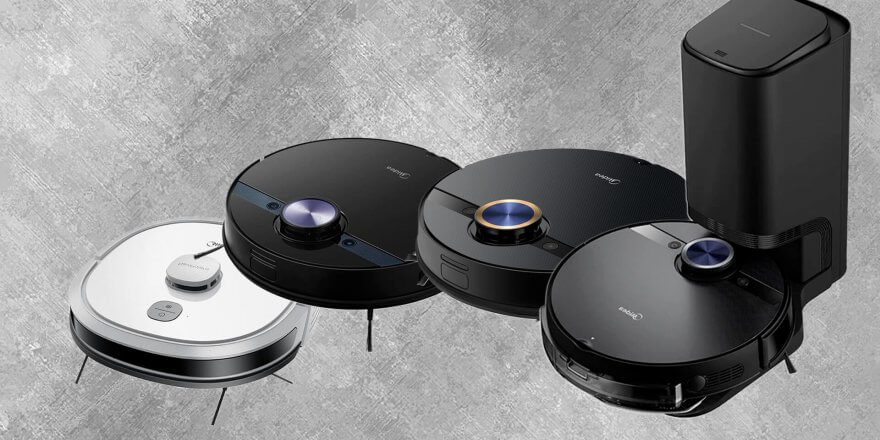
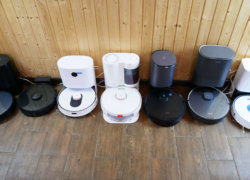
In this post, I've decided to compare the Midea line of robot vacuum cleaners, specifically the lidar models: the M6, M7, M7 Pro, and S8+. The difference in price between the first three models is negligible. They cost $140, $180, and $170, or $200, $245, and $260, respectively. Meanwhile, the flagship S8+ costs up to $310, or, at the exchange rate at the time of writing, between $375 and $450. So, below, I'll answer two questions: which Midea robot vacuum should you choose if your budget is under $200, and is it worth the extra money for a flagship model? So, let's get started!
I've immediately compiled links to purchase all the robots being compared in a table:
| Midea M6 | Midea M7 | Midea M7 Pro | Midea S8+ |
| $140-$170 | $170-$210 | $180-$210 | $260-$340 |
Design
I’ll immediately note that I didn’t have the Midea M7 model in my review, but in reality, it’s the same Midea M7 Pro, only without the vibration module for wet cleaning. Otherwise, the robots are identical, so for the purposes of comparison, I'll use the same test results for both robots.
First, let's compare the robots' designs. As I mentioned, they are all equipped with lidar for navigation, making them suitable for cleaning large areas and capable of spatial orientation.
Another feature common to all four robot vacuums is that they are equipped with two side brushes. This is a small addition, but it improves the quality of debris collection.
The central brush is identical across all robots. It's equipped with soft bristles that better collect pet hair and fur from various surfaces. The detachable brush design is a plus.
Well, all 4 are protected by 4 fall protection sensors.
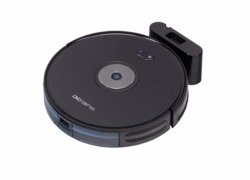
Now about the differences. New Midea M6, unlike its counterparts, has a non-standard body shape - square with rounded corners, which makes it better at sweeping out debris from corners.
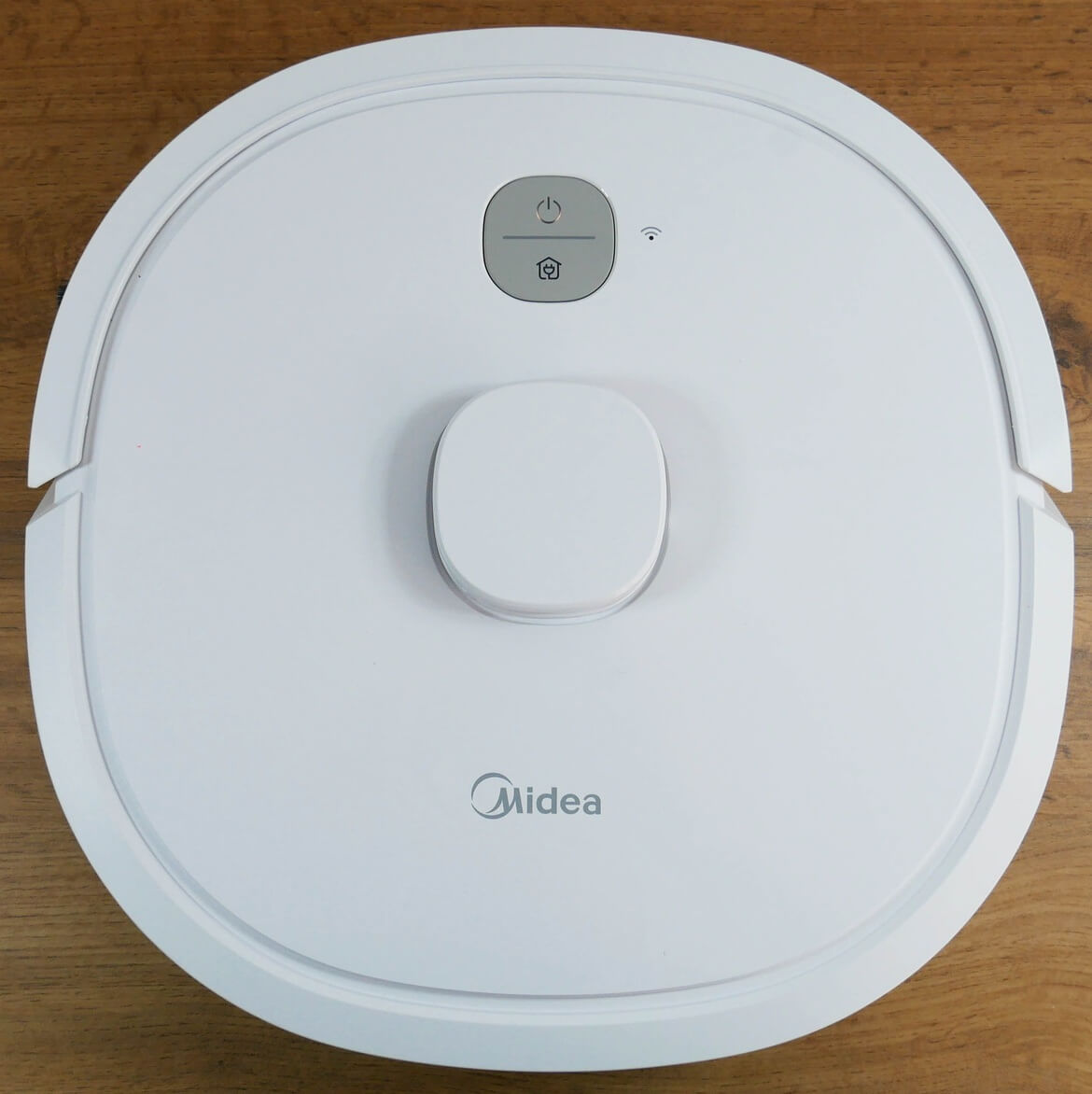
Midea M6
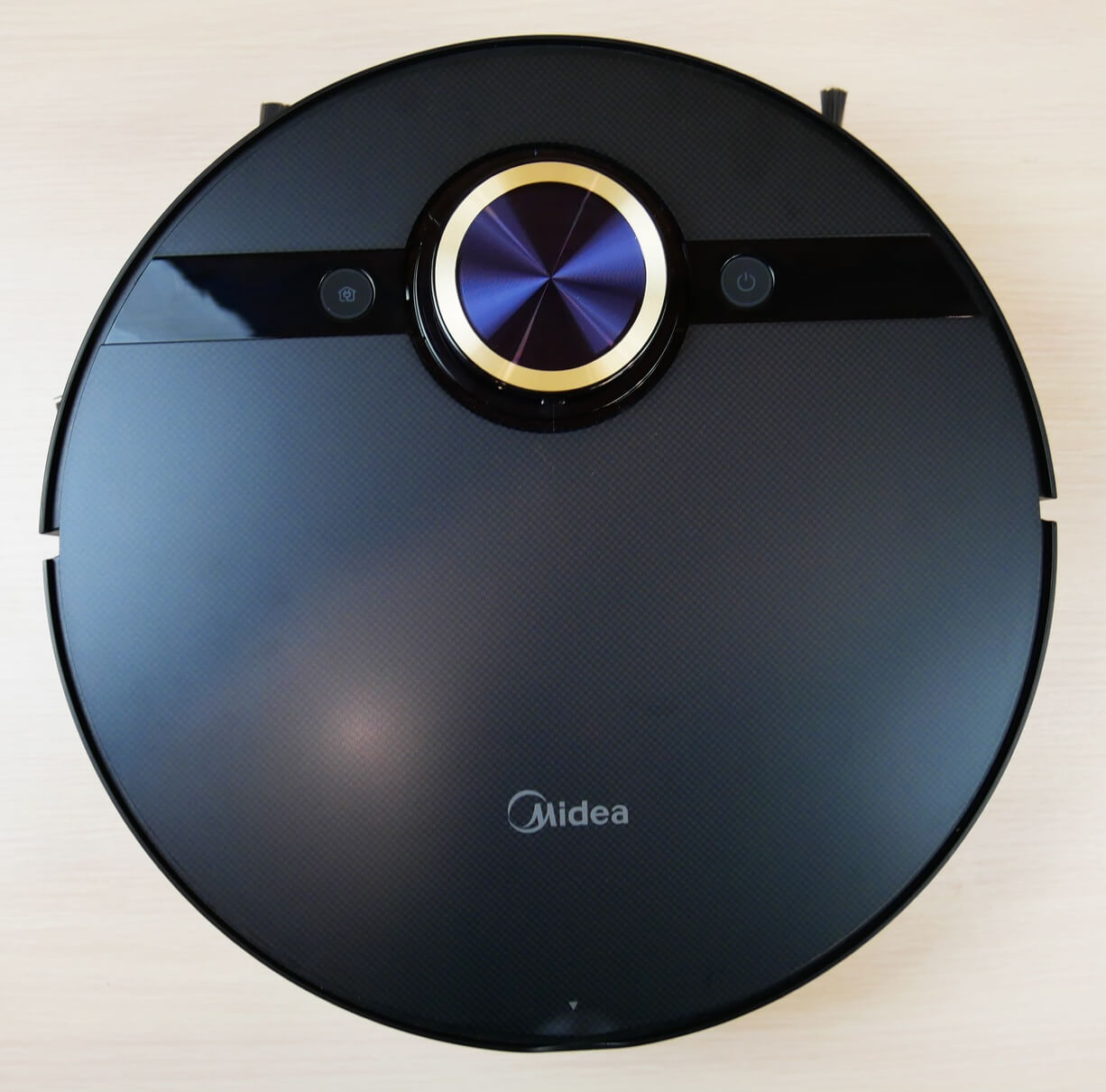
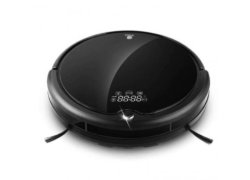
Midea M7/M7 Pro/S8+
The Midea M7, M7 Pro and S8+ have a separate dust collector with a triple air filtration system located under the top cover.
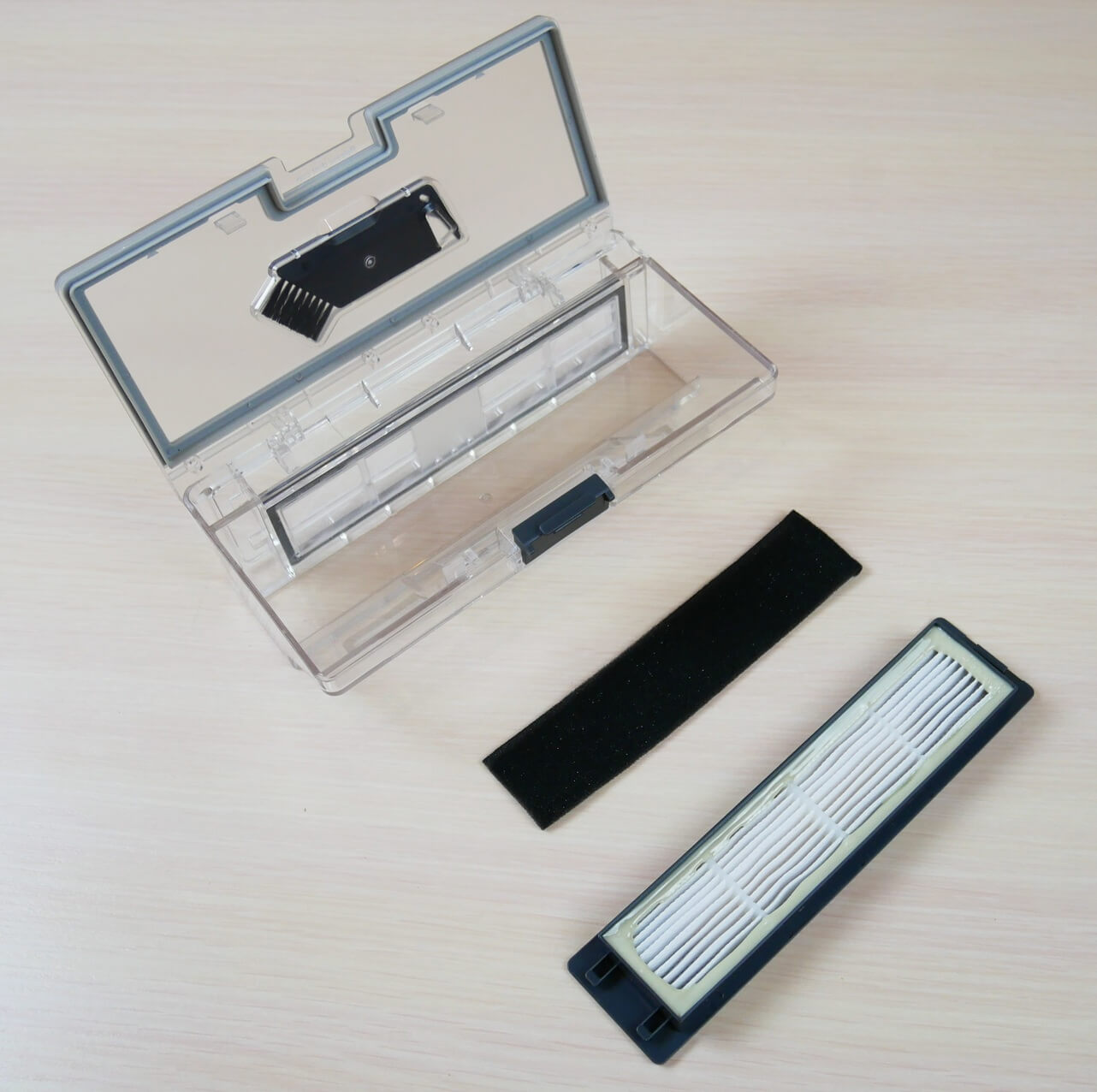
Midea M7/M7 Pro/S8+ Filtration System
The Midea M6, on the other hand, features a combined waste and water container. It's removable from the rear. It features a dual filtration system, eliminating the foam filter.
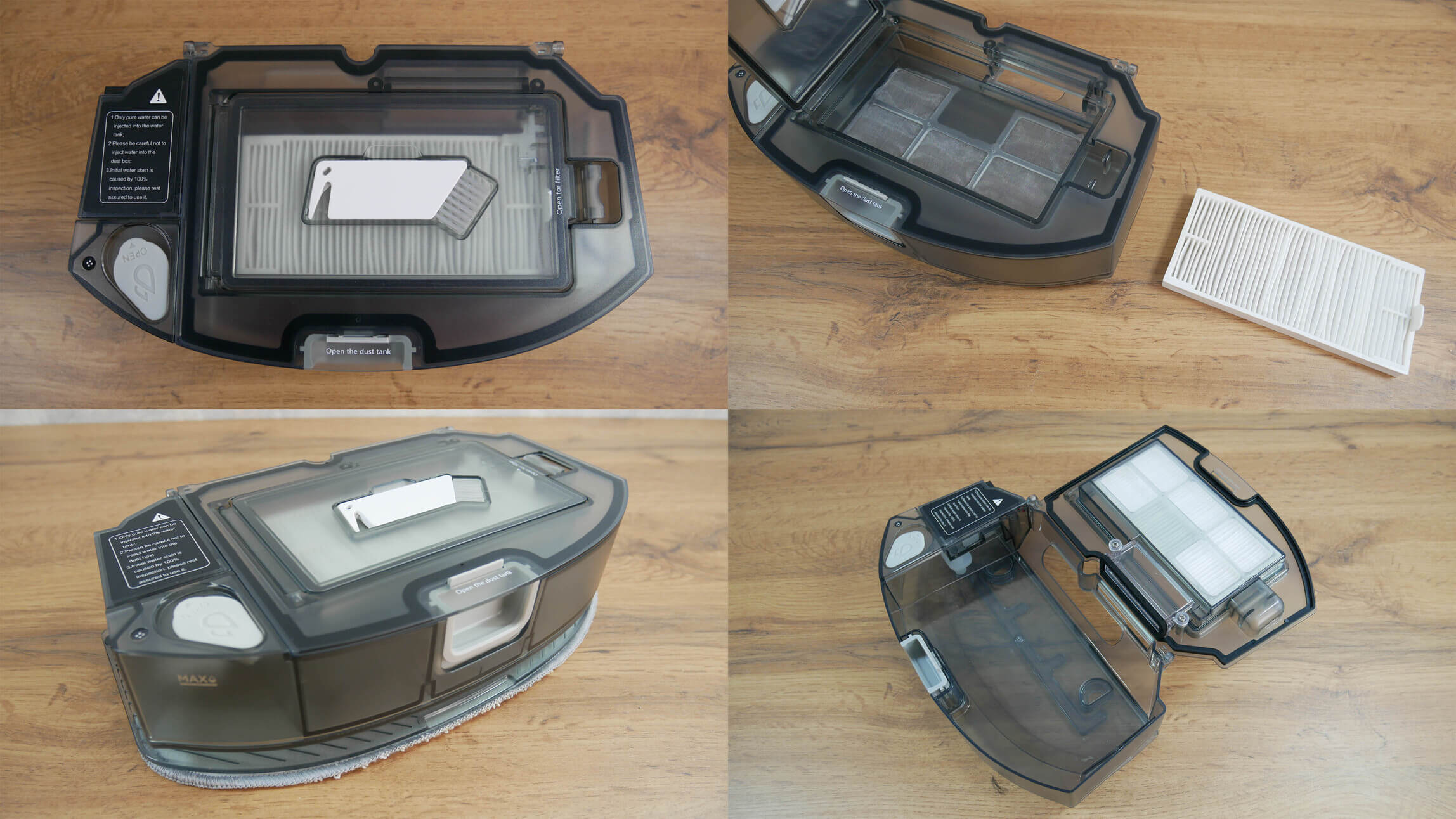
Combined container Midea M6
It's also worth noting that the M6 has a larger dust bin, holding 600 ml. The Midea M7 and M7 Pro hold up to 550 ml, while the S8+ holds up to 450 ml, though the S8+ features self-cleaning, which I'll discuss later.
Again, the Midea M6 has a 250 ml water tank housed in a combined container, and a holder with a cleaning cloth is attached to the bottom of the robot. The higher-end models in the lineup have a separate water tank mounted at the rear. This can be either a standard 220 ml water tank, which is included in all configurations, or a 200 ml vibration module, which is included with the M6. Midea M7 Pro and S8+.
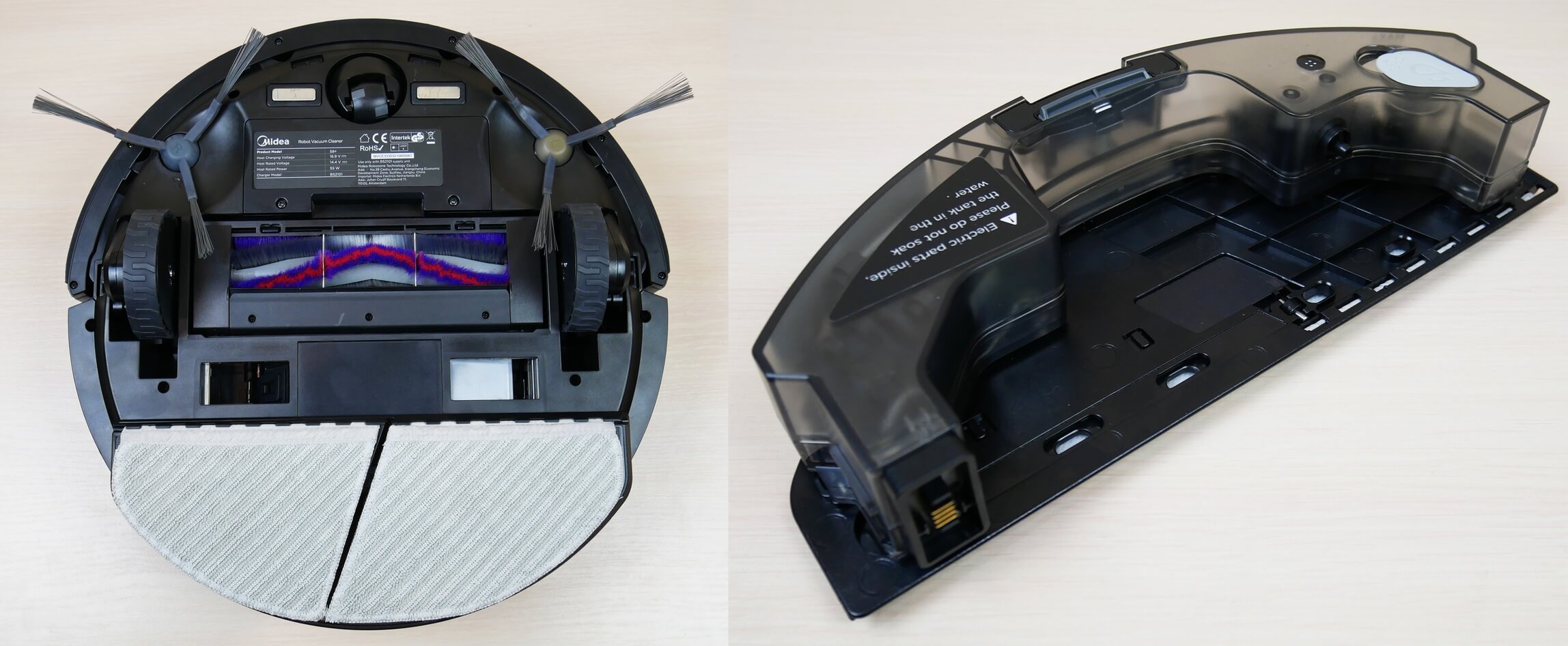
Tank with vibration module
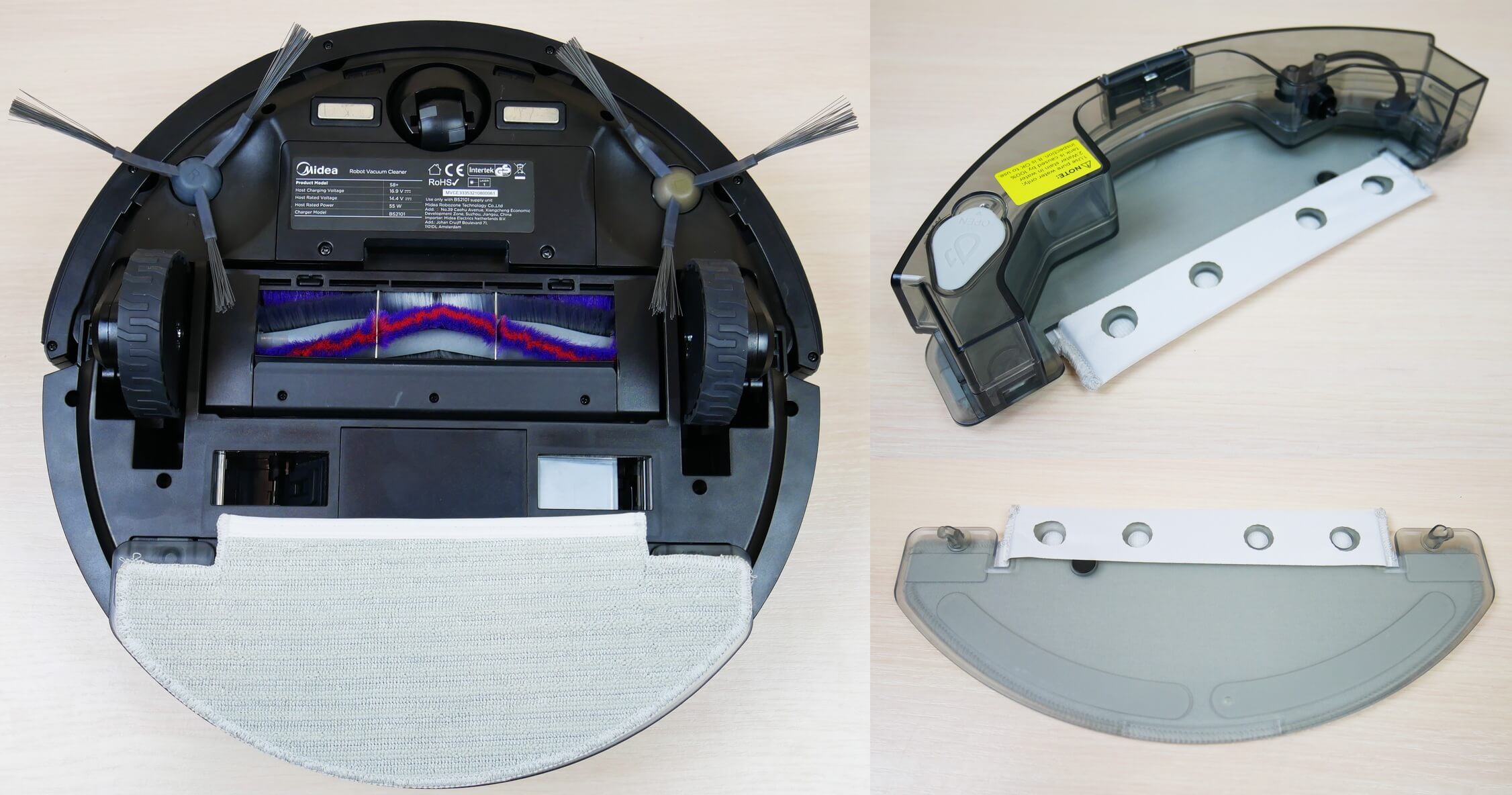
Water tank
Well, and the last difference, Midea S8+ Equipped with a self-cleaning dust collector station. Other robots, even the visually identical Midea M7 Pro, are not compatible with this station.
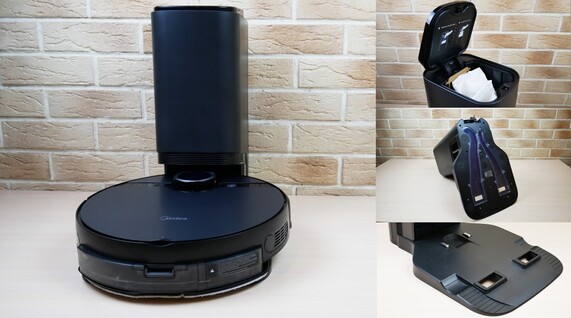
Self-cleaning station Midea S8+
Ultimately, comparing the designs, I can say that the younger M6 model has the most effective body shape for collecting debris, but wet cleaning is better implemented in the M7 Pro and S8+. The Midea M7 doesn't yet have any competitive advantages even over the younger model.
Technical specifications
The main characteristics of the compared robots are listed in the table for easy reference:
| Midea M6 | Midea M7 | Midea M7 Pro | Midea S8+ | |
| Battery capacity | 3350 mAh | 5200 mAh | 5200 mAh | 5200 mAh |
| Opening hours | up to 120 min | up to 180 min | up to 180 min | up to 180 min |
| Suction power | up to 2000 Pa | up to 4000 Pa | up to 4000 Pa | up to 4000 Pa |
| Cleaning area | up to 120 sq.m. | up to 250 sq.m. | up to 250 sq.m. | up to 250 sq.m. |
| Dust collector | 600 ml | 550 ml | 550 ml | 450 ml |
| Water tank | 250 ml | 220 ml | 200/220 ml | 200/220 ml |
| Passability | 20 mm | 20 mm | 20 mm | 20 mm |
| Dimensions | 340*97 mm | 350*97 mm | 350*97 mm | 350*97 mm |
| Noise level | 54-67 dB | 58-65 dB | 58-65 dB | 58-65 dB |
We see that the younger M6 model has a weaker battery, resulting in a shorter runtime and cleaning area. Furthermore, while the stated power is lower, the actual noise level is lower, as the values in the table are based on personal measurements with a sound meter. It's starting to become clearer why the Midea M6 is cheaper than the older M7 and M7 Pro. Let's move on!
Functional capabilities
The table summarizes the key features of the compared Midea robotic vacuum cleaners. These differences were previously discussed when comparing their designs.
| Midea M6 | Midea M7 | Midea M7 Pro | Midea S8+ | |
| Saving multiple cleaning maps in memory | Yes | Yes | Yes | Yes |
| Automatic zoning of a room into rooms | Yes | Yes | Yes | Yes |
| Selecting rooms and areas for cleaning | Yes | Yes | Yes | Yes |
| Virtual walls and no-go zones | Yes | Yes | Yes | Yes |
| Increased power on carpets | Yes | Yes | Yes | Yes |
| Setting up a cleaning schedule | Yes | Yes | Yes | Yes |
| Voice notifications in Russian | Yes | Yes | Yes | Yes |
| Yandex.Alice Support | Yes | Yes | Yes | Yes |
| Self-cleaning | No | No | No | Yes |
| Additional features | No | No | Mop vibration in wet cleaning mode | Mop vibration in wet cleaning mode, UV sterilization of water in the tank |
Again, the Midea M7 doesn't offer any advantages over the M6 in terms of features, but the S8+ boasts not only a self-cleaning station but also a UV lamp in the tank with a vibration module. In theory, this should disinfect the water, but I can't confirm its effectiveness.
Testing
And the most important thing to compare is the robot vacuum cleaner test results. The comparison video clearly demonstrates the results of all tests; I recommend watching it:
All models have good navigation and no problems with spatial orientation were found during testing.
When it comes to suction power, there's a difference. The Midea M7, M7 Pro, and S8+ are truly powerful robot vacuums. In the test, they were able to suck up debris from crevices up to 10 mm deep, while the smaller M6 can only suck up to 4 mm. While this result is still above average, the actual power is significantly less than that of the higher-end models in the lineup.
However, the Midea M6 performed better on laminate floors. Thanks to its unique body shape, it was able to sweep debris even into corners, something its larger, rounder siblings couldn't do. In this regard, it was unrivaled.
Midea M6:
However, when cleaning carpets, the Midea M7 Pro and S8+, and, accordingly, the M7, proved more effective. Their increased suction power likely played a key role here.
The Midea M7 Pro and S8+ are objectively better at wet cleaning, as they feature a vibrating platform for scrubbing. The Midea M6 even performed slightly better than the M7 Pro with a standard water tank, which is essentially a Midea M7 in this configuration. So, in this regard, again, the M7 is inferior to the M6.
All the compared robots have good cross-country ability; they can easily cross thresholds up to 2 cm high.
And an equally important test is driving on black surfaces. The Midea M7 Pro, S8+, and, consequently, the M7, drive over black surfaces without any problems. The M6 has issues with black carpets, and often backs up on them, which is important to keep in mind.
Comparison results
I've compiled a detailed comparison of Midea robot vacuums currently available and worth considering. I didn't consider the gyroscope-based models due to their extremely low efficiency. I can say that objectively, the Midea M7, given its price, doesn't offer any competitive advantages, so there's little point in considering it. The only options left are the M6, M7 Pro, and S8+.
So, if you need high-quality dry cleaning on hard floors, the entry-level M6 model definitely performed better, thanks to its angular body and ability to sweep debris into corners. Overall, in my opinion, it's one of the best robot vacuums in the sub-$200 price range.
Midea M7 Pro:
If you have carpets on your floors, or if wet cleaning is your priority, then it makes sense to choose between the Midea M7 Pro and S8+, which are equipped with powerful motors and vibrating platforms for scrubbing away dirt. As mentioned earlier, the only difference is the self-cleaning function, and as I mentioned in instructions for choosing a robot vacuum cleanerThis feature doesn't affect the cleaning quality in any way, but it only makes the robot easier to maintain. So, in this regard, the choice is yours whether to pay extra or not.
Midea S8+:
On this note, I'd like to conclude our comparison of the Midea M6, M7, M7 Pro, and S8+ robot vacuum cleaners. If you have any questions, please ask them in the comments. Happy shopping! Bye!
Can you tell me if the vibration module from the M7 is compatible with the S8+ (are they interchangeable)?