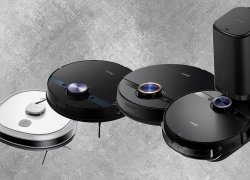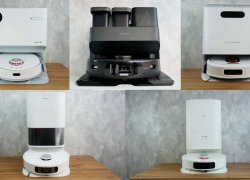
Comparison of Hobot LEGEE 669, 688, 7, D7, and D8 robot vacuum cleaners
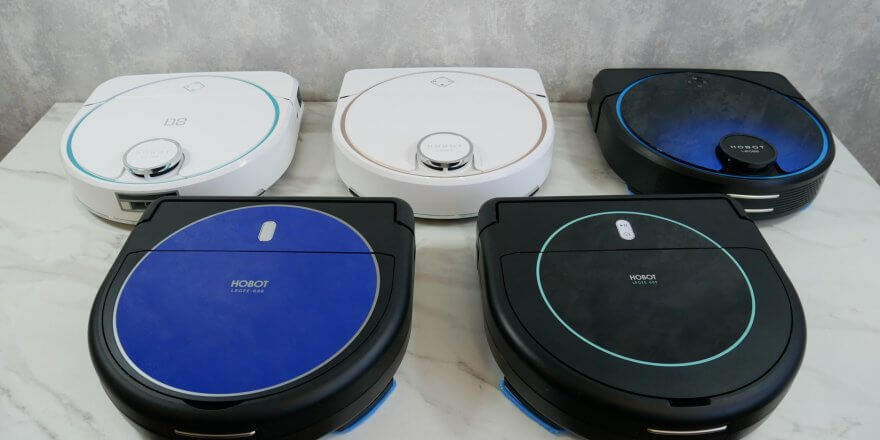
Hello to all readers of this project! In this review, I've decided to compare the Hobot Legee line of robotic floor cleaners. Specifically, the new 2023 model, the Hobot Legee D8, with its predecessors, the D7, 7, 688, and even the 669. These are all the Hobot floor cleaning robots currently available. I'll compare the design differences between the models, the differences in functionality, and, most importantly, the test results. We'll see how Hobot robotic vacuum cleaners actually compare when tested under identical conditions. I'll also tell you which Hobot is best for different conditions. So, let's get started!
Price
First, let's compare the prices of the robots so we can understand what the extra cost is. The most affordable robot, and also one of the very first in the line, is the Hobot Legee 669. To be more precise, it was the second to be released, immediately after the 668 model. This robot is priced between $230 and $240. A little more expensive Hobot Legee 688 – $270. Price Hobot Legee 7 starts at 29 and goes up to 3$40. It costs about the same Legee D7 – from $30 to $350. Well, the new product Hobot Legee D8 It hasn't gone on sale yet, but according to brand representatives, the robot will cost up to $400, which is quite reasonable considering its capabilities.
| Legee 669 | Legee 688 | Legee 7 | Legee D7 | Legee D8 |
| $230-$240 | up to $270 | $290-$340 | $300-$350 | up to $400 |
The price range for Hobot robots is mid-range, with the difference between previous models and new ones not being that big.
Design
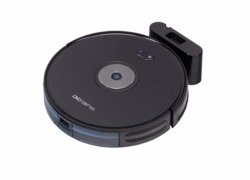
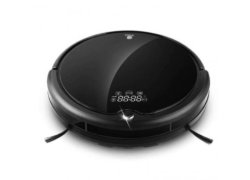
Now let's compare the robots' designs. What they all have in common is that all models, without exception, feature a D-shaped body, which improves the cleaning performance of corners.
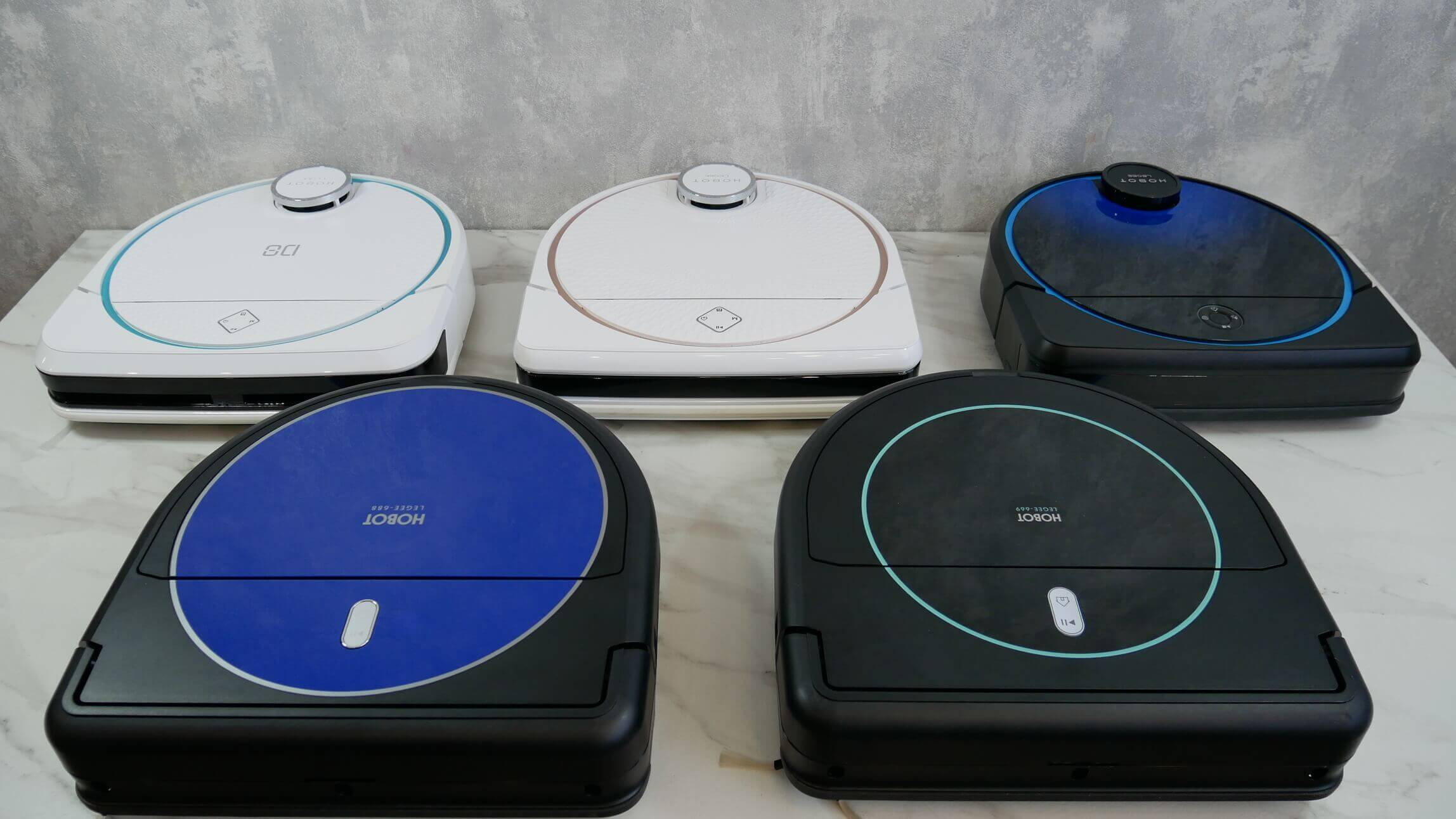
A more important difference is that the 669 and 688 models are equipped with laser sensors on the bumper, which they use to navigate. These two models are unable to store a map in their memory. However, the Hobot Legee 7, D7, and D8 use lidar for navigation, putting them on a completely different level. There's a significant difference in both functionality and spatial accuracy. I'll show you all the details in the tests. For now, we're just talking about the design.
All models in the Legee line have separate dust collectors and water tanks located under the top cover. The tank capacities vary slightly, which I'll compare in the specifications. I'll only highlight that the robots' filtration systems use a mesh filter and HEPA. Moreover, the Legee 7, D7, and D8 allow you to wash the HEPA filter with water. The D7 and D8 have a convenient cleaning tool stored on the water tank. The main difference between the Hobot Legee D8 and its predecessors is the inclusion of an eco-press in the dust collector. This mechanical device compresses lightweight debris, thereby increasing the dust collector's estimated capacity by up to five times. This means you'll need to empty the dust collector five times less often. This is an alternative to the self-cleaning feature developed by Hobot engineers, while also significantly saving on bags.
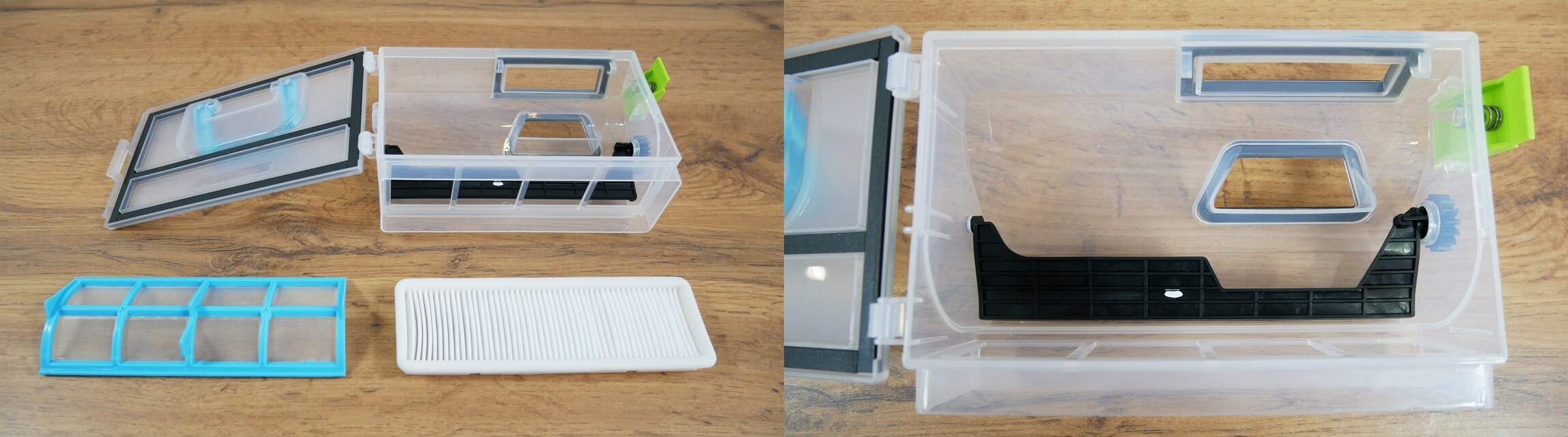
ECOpress and filtration system
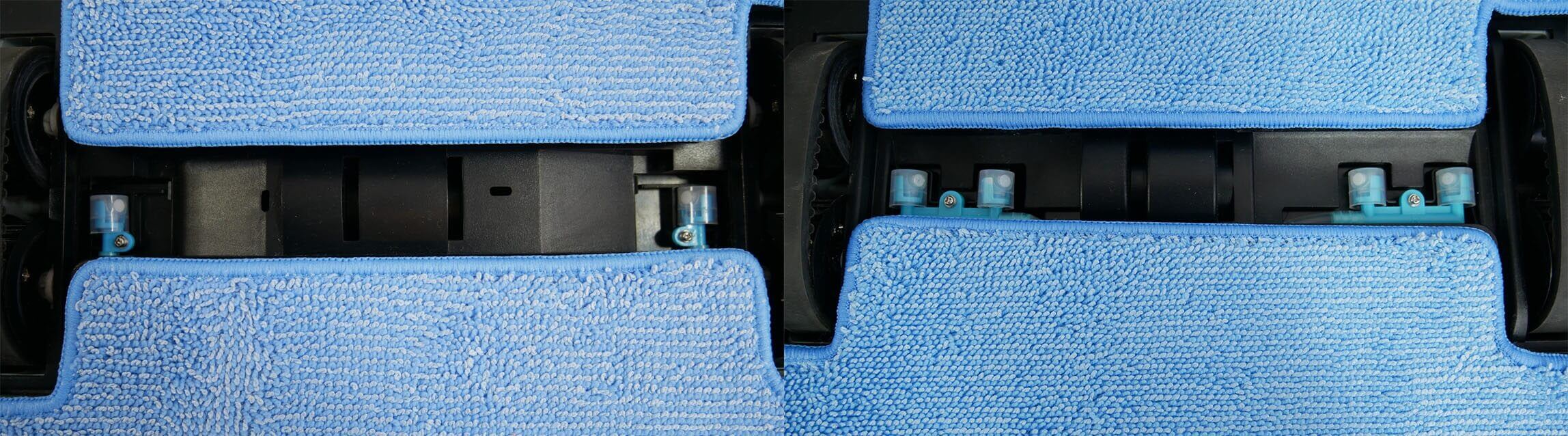
The cleaning module of Hobot robot vacuums is much more distinctive. Models 669, 688, and Legee 7 feature two moving platforms with cloths. A dust collection chute is located in front of the front cloth, and nozzles for spraying liquid onto the floor are located between the platforms.
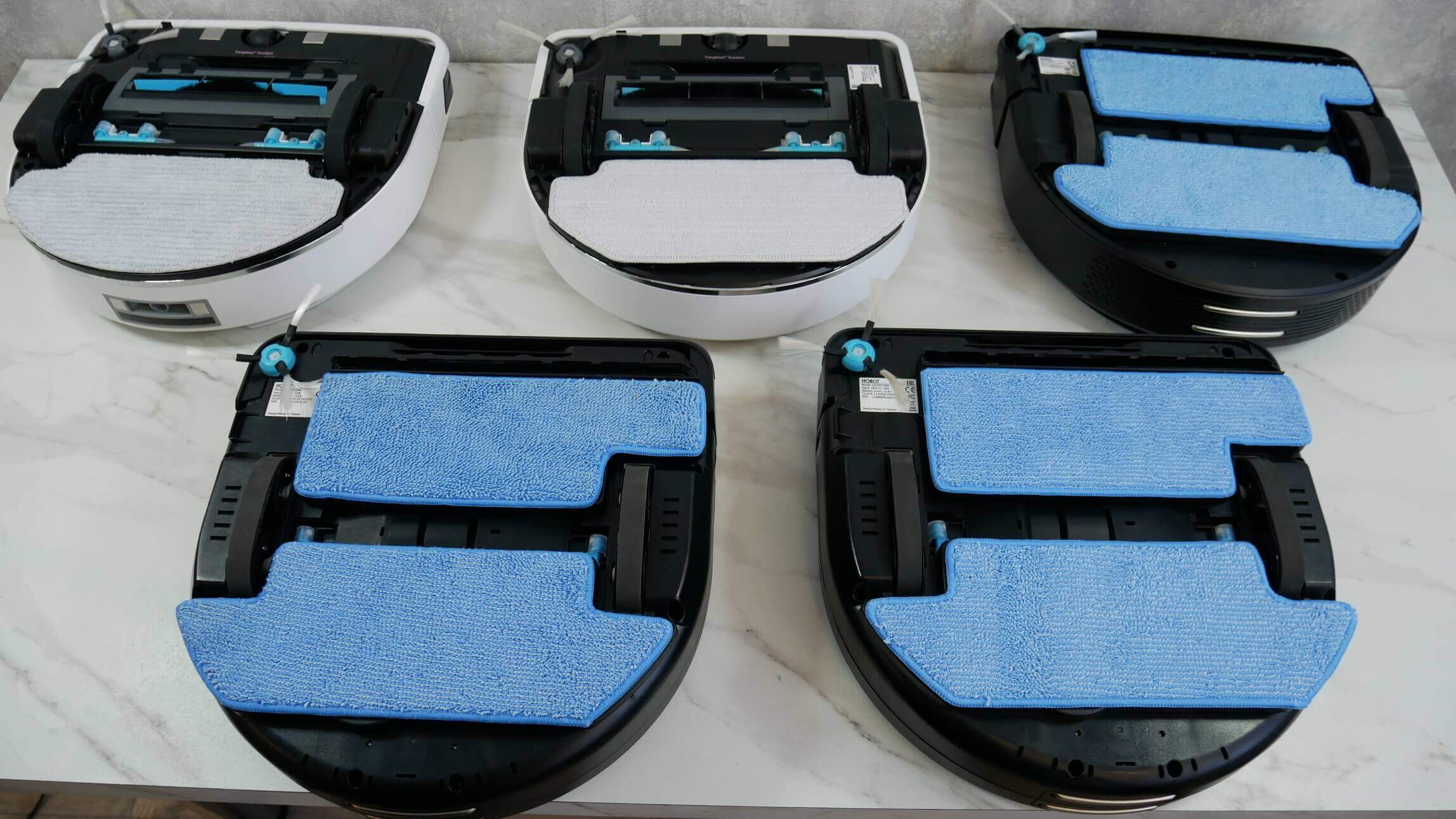
So, the 669 and 688 have absolutely the same cleaning module, and the Legee 7 has a minimal difference in the number of these sprayers: 4 pieces, not 2.
The Hobot Legee D7 and D8 feature a fundamentally different cleaning module. They now feature a central brush, which improves dust collection. However, the key feature of the D-series isn't the brush itself, but the pre-collection of light debris ahead of the central brush. This way, hair and fur are sucked directly into the dust bin, while the brush then collects heavier debris. This technology protects the central brush from hair and fur, a unique, patented solution developed by Hobot.
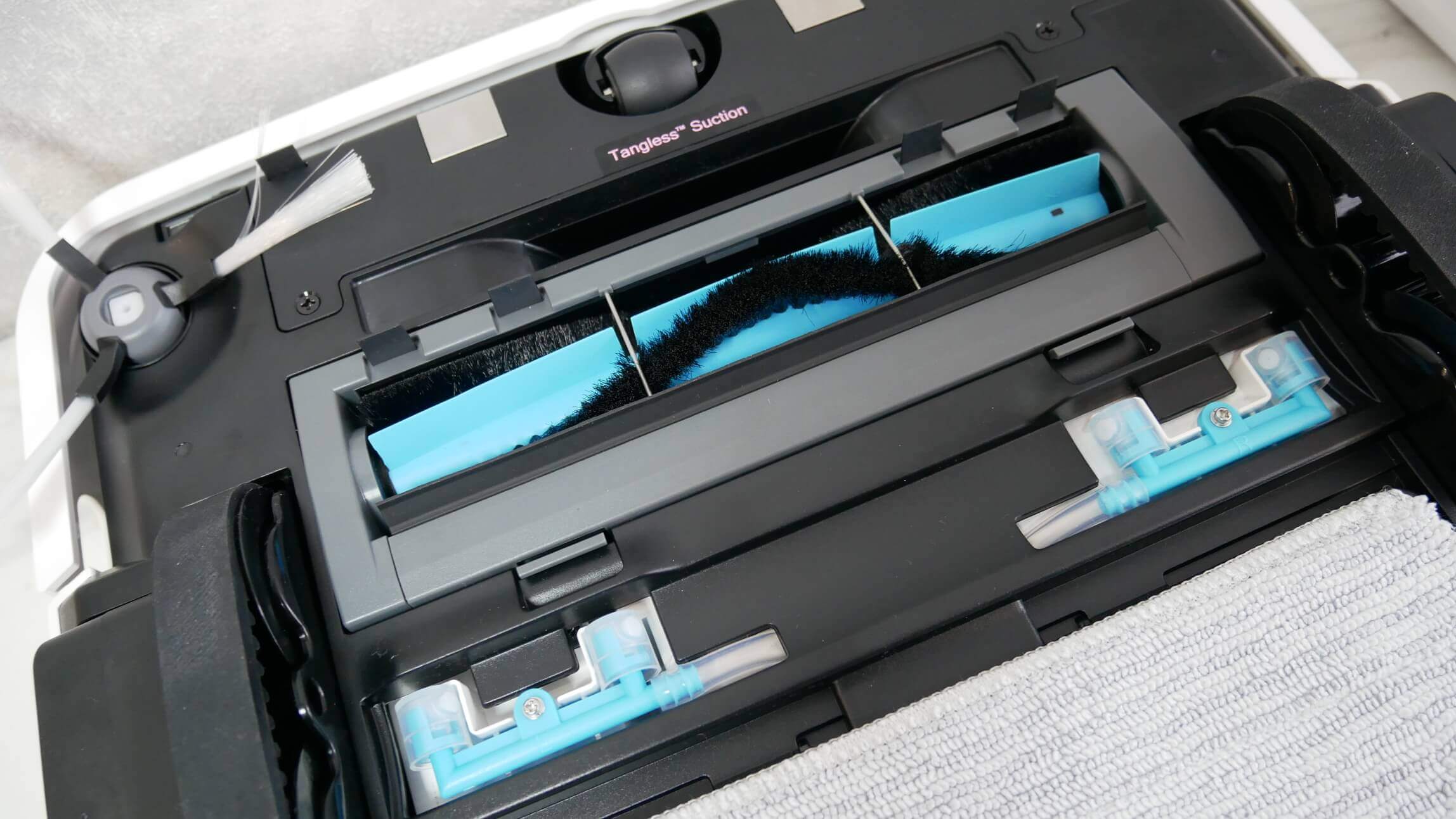
Both the D7 and D8 have four nozzles behind the turbo brush for spraying liquid onto the floor, like the Legee 7, but these robots share a single cleaning platform. While the platform on both models rises when driving onto carpets, the D7's platform simply presses the cleaning platform to the floor without oscillation, while the D8 features mechanical oscillations that mimic the motion of a human hand when scrubbing dirt. The result is a symbiosis of the cleaning modules of the previously released Legee 7 and the Legee D7.
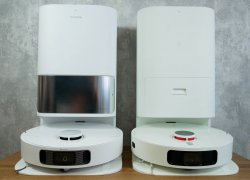
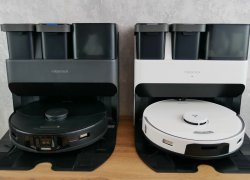
Furthermore, the D8 has a KEY difference from all its predecessors: it is compatible with the optional LuLu station, which will be available in the second half of 2023. This station rinses the cleaning cloth with clean water, removes debris, automatically refills the robot's water tank, and dries the cleaning cloth with warm air after the cleaning cycle. A very useful feature that increases the robot's autonomy.
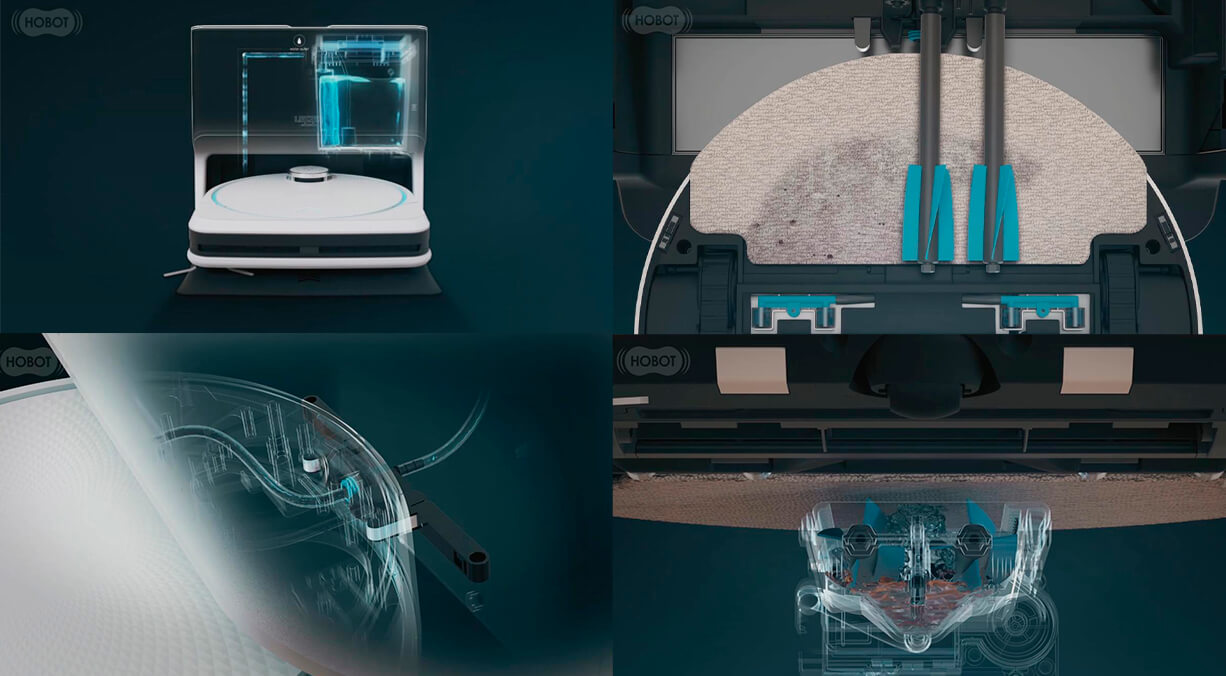
Trunk LuLu
I've summarized all the differences in a table to make it easier for you to compare the designs of Hobot robots:
| Legee 669 | Legee 688 | Legee 7 | Legee D7 | Legee D8 | |
| Navigation | Gyroscope + Laser sensors | Gyroscope + Laser sensors | Lidar | Lidar | Lidar |
| Dust collector | 500 ml | 500 ml | 500 ml | 500 ml | 500 ml |
| Water tank | 320 ml | 320 ml | 340 ml | 320 ml | 320 ml |
| Side brush | 1 | 1 | 1 | 1 | 1 |
| Central brush | No | No | No | Eat | Eat |
| Front chute for collecting hair, fur and light debris | Eat | Eat | Eat | Eat | Eat |
| Platform with a napkin | 2 pcs (movable) | 2 pcs (movable) | 2 pcs (movable) | 1 piece (fixed) | 1 piece (movable) |
| Number of oscillations | 600 times per minute | 600 times per minute | 900 times per minute | — | 1300 times per minute |
| Lifting napkins on carpets | No | No | No | Yes | Yes |
| Number of water supply nozzles | 2 | 2 | 4 | 4 | 4 |
| Control | Remote controller | Remote control + app | Application | Application | Application |
| Additionally | LuLu Self-Cleaning Wipe Station, ECOpress Waste Bin |
Technical specifications
Let's immediately compare the characteristics of Hobot robotic vacuum cleaners:
| Legee 669 | Legee 688 | Legee 7 | Legee D7 | Legee D8 | |
| Battery | 2750 mAh | 2750 mAh | 4500 mAh | 4900 mAh | 4900 mAh |
| Suction power | up to 1800 Pa | up to 2100 Pa | up to 2700 Pa | up to 2700 Pa | up to 5000 Pa |
| Opening hours | 80 min | 90 min | 140 min | 140 min | 140 min |
| Charging time | 150 min | 150 min | 200 min | 200 min | 200 min |
| Cleaning area | up to 60 sq.m. | up to 130 sq.m. | up to 240 sq.m. | up to 240 sq.m. | up to 240 sq.m. |
| Obstacle clearance | 3 mm | 3 mm | 5 mm | 20 mm | 20 mm |
| Noise level | 63-64 dB | 64-67 dB | 61-71.5 dB | 62-72 dB | 62-73.7 dB |
I'd like to point out that the noise level was measured personally using a sound level meter. Actual suction power will be compared later in the tests.
Functional capabilities
It's important to compare the robots' functions. It's worth noting that the Hobot Legee 669 and 688 support remote control, with the 688 also controlled via a proprietary mobile app. The Legee 7, D7, and D8, however, are controlled via an app and four multifunctional buttons on the body.
The main features of the robot application are also compared in the table:
| Legee 669 | Legee 688 | Legee 7 | Legee D7 | Legee D8 | |
| Control | Remote control | Remote control + app | Application | Application | Application |
| Real-time map generation | No | Yes | Yes | Yes | Yes |
| Saving a map to memory | No | No | Yes | Yes | Yes |
| Zoning the premises into rooms | No | No | Yes | Yes | Yes |
| Selecting rooms for cleaning | No | No | Yes | Yes | Yes |
| Virtual walls and no-go zones | No | No | Yes | Yes | Yes |
| Creative voice alerts | No | No | Yes | Yes | Yes |
| Cleaning under the curtains | No | No | Yes | Yes | Yes |
| User zones | No | No | No | Yes | Yes |
| Yandex.Alice | No | No | Yes | Yes | Yes |
| Intelligent control of wipe wetting depending on floor temperature | No | Yes | Yes | Yes | Yes |
And here we see all the advantages of robotic vacuum cleaners with lidar navigation, compared to laser sensors on the bumper. It becomes clear why they're paying extra.
Testing
And finally, we'll compare the Hobot robot vacuum cleaners in real-world tests. We'll run several of the project's usual tests.
You can clearly see the results of all tests in the video comparison version on our channel:
Navigation
Speaking of navigation, the Legee 669 isn't controlled via an app, but its navigation is identical to the 688, so we'll assume the results are the same. We see that robots with lidar clean faster and don't leave any uncleaned areas. The only difference is that the Legee 7 doesn't drive onto carpets, so it didn't clean part of the room. Meanwhile, the D7 and D8 were able to cover the entire area, including the carpets, so the actual cleaning area is larger. The cleaning speed of the Legee 7, D7, and D8 is roughly the same, as is their navigation algorithm.
Suction power
It's much more interesting to test the actual suction power. The Legee 669 was able to vacuum debris from a 4 mm deep gap, while the 688 achieved the same result, albeit slightly higher outside the shooting area. Nevertheless, it's still a plus. The Legee 7 was also able to vacuum debris from a 4 mm deep gap. It's worth noting that this power is more than sufficient for cleaning hard surfaces. The Hobot Legee D7, however, is capable of vacuuming debris from a 10 mm gap, a result it achieved in a separate test. This is a very good result, and the robot is truly powerful. The D8, unfortunately, fell just short, achieving a result of 8 mm. This is also an excellent result, but the reason the D7 performed better is because the D7's pre-suction can be turned off, while the D8's cannot.
As a result, by simultaneously drawing suction through two holes, the D8's overall suction power is distributed, while the D7's is concentrated in a single hole. In any case, the actual suction power of both the D7 and D8 is very high and they are definitely suitable for cleaning carpets.
Dry cleaning
As for dry cleaning, all the robots performed well, but there are a few observations. Models 669, 688, and 7 collect some dust on the front dry cloth, which attracts dust through static electricity, while the damp rear cloth scrubs floors clean. The D7 and D8 use a more traditional cleaning principle: the central brush collects all debris, and the damp cloth finishes off the dirt. Importantly, all Hobot robots sweep debris well into corners.
Carpet cleaning
Only the Hobot Legee D7 and D8 can clean carpets, and they do a good job. Other robots avoid carpets due to their low traffic, but they don't need to.
Removing dirt
When comparing the cleaning performance of light stains, the models with a movable cleaning module, namely the Legee 669, 688, 7, and D8, performed better. The D7 also performed well, as the cloth presses down on the floor, but still left a small trace of dirt on the stand.
However, when it comes to scrubbing tough stains, the D7 clearly falls short compared to its Hobot Legee siblings. We see that all other robots handled the task effectively, thanks to their movable cleaning module. The Legee D7, on the other hand, can slip and become stuck due to the back end being pressed down by the cleaning pads, causing the tracks to skid. The movable cleaning module even helps it budge when slightly stuck. Robots are unlikely to encounter such a challenging task in a domestic environment, but this test nonetheless demonstrates the clear advantage of movable platforms.
Driving through black surfaces
And the final test is driving over black surfaces. Here's an interesting observation. All five compared robots are afraid of a black carpet, as their height sensors detect it based on the height difference. However, Hobot robot vacuums aren't afraid of hard black surfaces. For example, I attached a black plastic background to the floor, and we see that the robots move across it without any problem.
Personal opinion
Comparing Hobot robot vacuums with each other, it's clear that progress is constantly evolving, and engineers strive to create the perfect product with each model. First, they switched from laser sensors to lidar. Then they implemented a cleaning pad lift feature for carpets. But they realized that the core feature of Hobot Legee robots—the moving cleaning platforms—is the brand's strong point, and they reintroduced this unique solution in the Hobot Legee D8.
Overall, the most advanced product in the Hobot lineup to date is, of course, the Legee D8, and it truly performed well as both a vacuum cleaner and a floor polisher. In other words, it draws on the strengths of the Legee 7 and D7.
If you don't have carpets and have perfectly level floors, you can save money and choose the Legee 7. However, the optional LuLu station, which is only supported by the new D8 model, is much more important. If you don't need the station, then you can save money and opt for the Legee 7.
If you have carpeted floors, you'll definitely need to choose between the Legee D7 and D8. Their dry cleaning performance is identical. However, the wet cleaning performance and optional station make the D8 a more attractive option, despite the small price difference. If none of these factors are important to you, you can save money and opt for the D7.
The cheaper 669 and 688 models are ideal for smaller spaces without carpets, and if you're not interested in the advanced features available with lidar, such as cleaning and polishing floors in a single room.
Legee 668:
And don't forget that all Hobot robot vacuum cleaners come with a full warranty and after-sales service, including support from company representatives. You can also easily order accessories and components for Hobot robots on the official website.
Legee 669:
I hope this detailed comparison helped you understand the differences between Hobot robot vacuums and which one is best for your needs. If you have any questions, please ask them in the comments. Happy shopping. Bye!